






 |
|
|||||||||||||||
 |
||||||||||||||||











 |
|||
 |
Tiger Balm Gardens / Haw Par Villa – History, Architecture & Significance 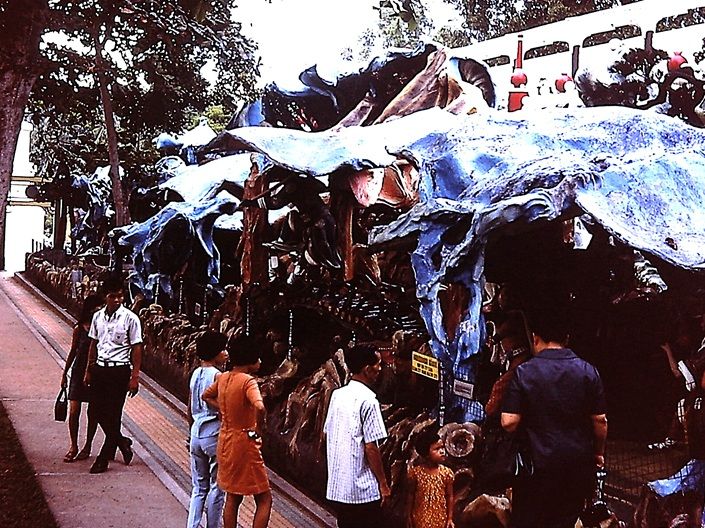
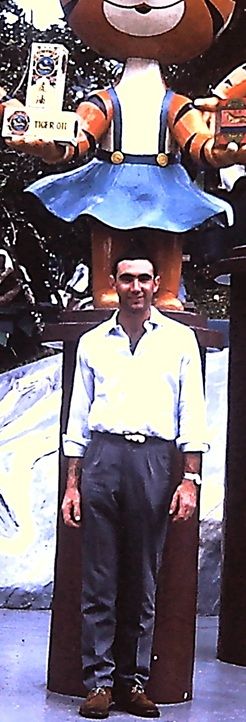
Haw Par Villa, originally called the Tiger Balm Gardens, is an 8.5 hectare open air park filled with colourful scenes from Chinese myths, moral stories, and mid 20th century imagination. It was built in 1937 by Aw Boon Haw and Aw Boon Par, the brothers who created Tiger Balm, as a place where visitors could learn traditional lessons through sculptures instead of written texts. Part moral guide, part fantasy world, and part nostalgic look at Southeast Asian culture, it has become one of Singapore’s most unusual and long lasting attractions. The name changed from “Tiger Balm Garden” to “Haw Par Villa” in 1985, when the Hong Kong Tiger Balm Garden was redeveloped and renamed, although many people still use the original name. Haw Par Villa is filled with hundreds of statues and dioramas. A diorama is a three dimensional scene—small or life size—that recreates a moment or story using figures, objects, and a painted background to make the display feel real. Many of these scenes show famous stories from Chinese literature, such as Journey to the West, Madam White Snake, and the well known Ten Courts of Hell, which illustrates the results of good and bad behaviour. Most of the sculptures were made in the 1930s to 1950s using concrete and plaster, and they have changed very little since then. Their bright colours, dramatic poses, and bold storytelling still give the park its unique and unforgettable style. 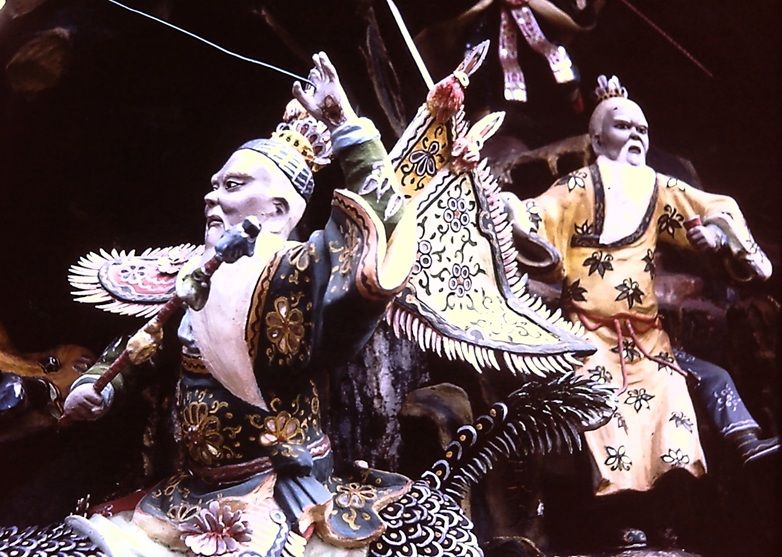 When visitors enter Haw Par Villa, they walk under a traditional Chinese style paifang. This colourful gateway marks the moment they leave the everyday world and step into the mythological and moral universe created by the Aw brothers. The paifang follows the classic design, with bright paint, layered roofs, curved eaves, and decorative beams. Its red, green, blue, and gold colours are typical of Chinese temples and symbolise protection, good fortune, and cultural importance. This gateway acts as the first sign of what lies ahead, preparing visitors for the stories, lessons, and surreal scenes found throughout the park. 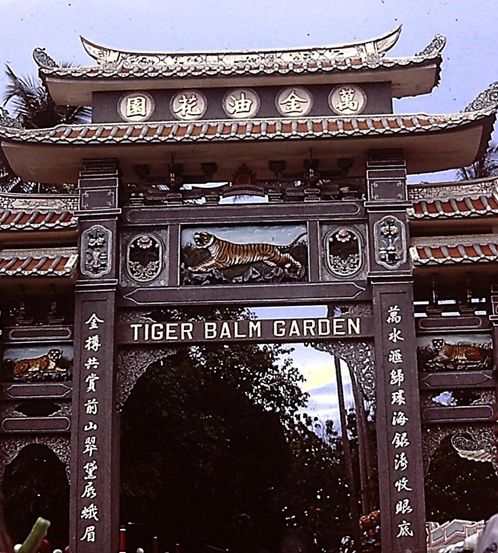 Near the entrance is the Thai Dancer statue, now part of the park’s small but distinctive Thailand Corner, created during the redevelopment of the 1980s and 1990s. It stands out because most of Haw Par Villa focuses on Chinese mythology, yet this figure introduces a Southeast Asian cultural layer. The dancer’s pose follows classical Thai dance traditions, which have deep roots in ancient Indian movement styles. 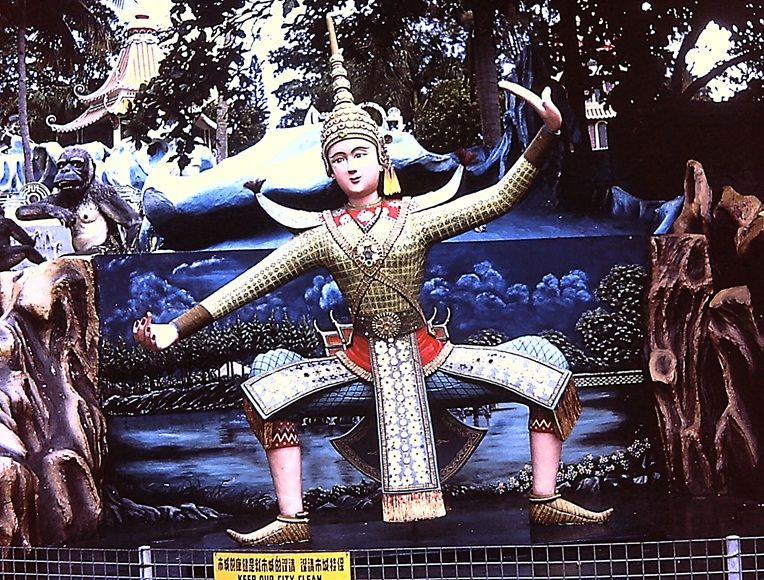 Also close to the entrance are the different statues of the Laughing Buddha. With his round belly and joyful expression, he represents Budai, a monk associated with happiness and abundance. 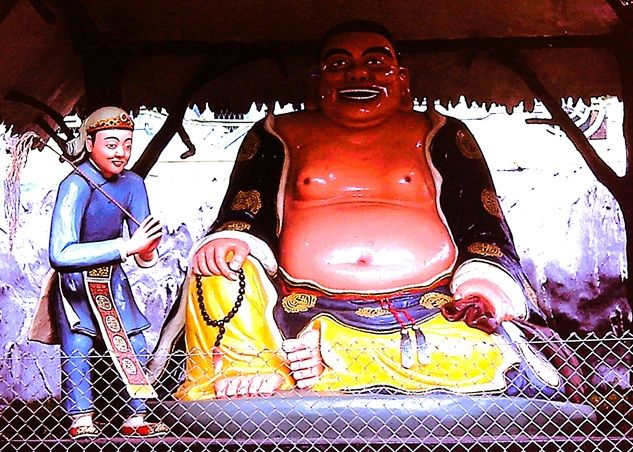 Many visitors rub the belly of one of the statues for good luck, a light hearted tradition based more on folklore than formal Buddhist teaching. 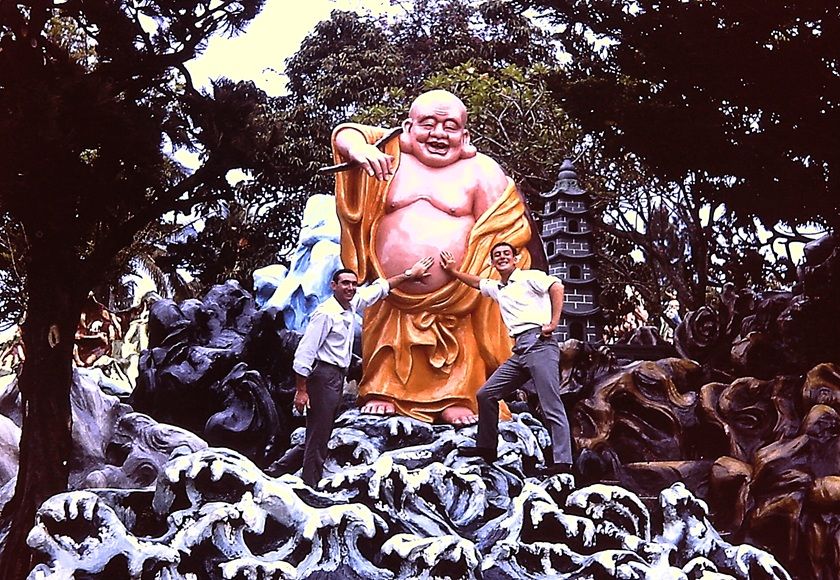 As visitors move further into the park, they come across brightly painted sumo wrestler statues. These figures are not part of Chinese mythology but reflect the Aw brothers’ later vision of creating a broader “Asian cultural garden.” Their presence adds to the park’s eclectic mix of cultures and styles. 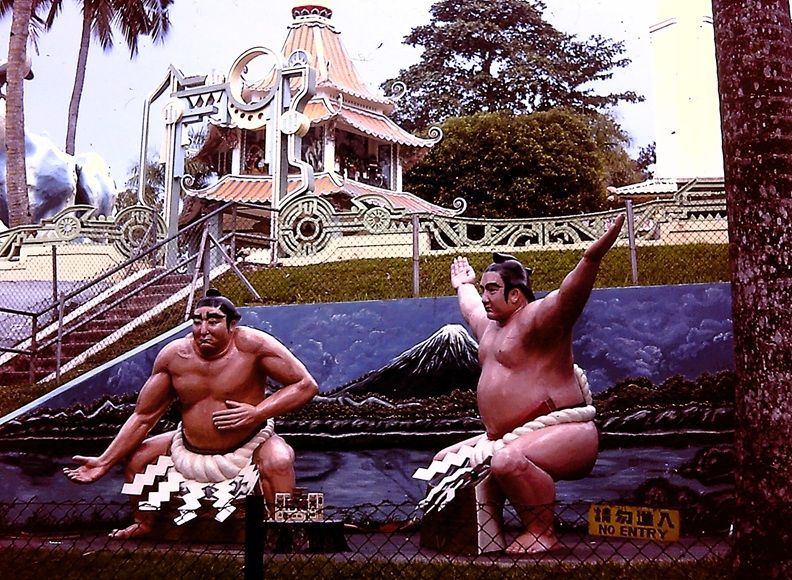 One of the most striking figures in the park is the emaciated Buddha. This statue represents the period when Gautama Buddha practised extreme self denial after leaving his royal life. His thin, starved appearance symbolises the belief that a person could gain complete control over the body through ascetic practices. It is a powerful reminder of the Buddha’s early search for enlightenment before he later rejected such extremes. 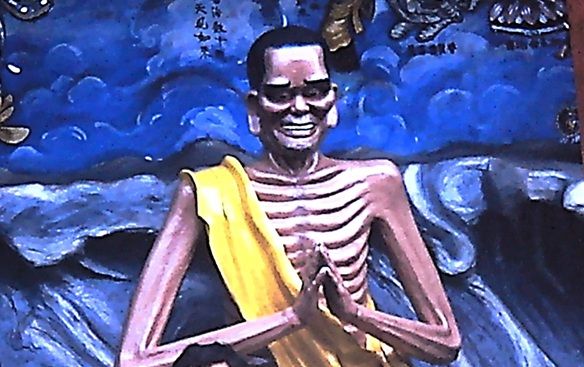 Other statues in the park include figures of the Buddha, Confucius, and Lao Tzu. These three thinkers shaped much of East Asian philosophy and spirituality, and their presence reflects the park’s interest in moral teaching and cultural heritage. 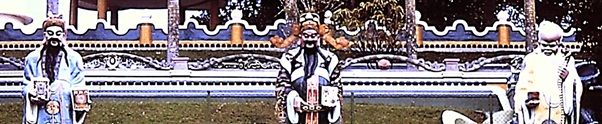 The Buddha, born Siddhartha Gautama in the 5th century BCE, was a prince who gave up his royal life to understand and end human suffering. After attaining enlightenment under the Bodhi tree, he taught the Dharma, which includes the Four Noble Truths and the Noble Eightfold Path—a guide to ethical living, mental discipline, and wisdom. Over time, Buddhism spread across Asia and developed into many traditions, making the Buddha one of the most influential spiritual figures in history. Haw Par Villa includes several statues of him in different forms, such as the Protection Buddha, Teaching Buddha, Meditation Buddha, Earth Touching Buddha, Medicine Buddha, and Reclining Buddha. Confucius (551–479 BCE) was a Chinese philosopher whose teachings shaped Chinese society for more than two thousand years. He believed that a good society is built on moral behaviour, respect for family, proper conduct, and virtuous leadership. His ideas, preserved in the Analects, influenced education, politics, and social values across East Asia. 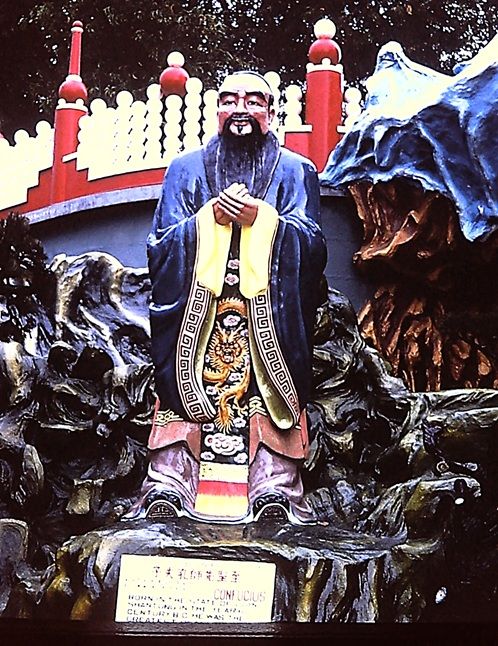 Lao Tzu, the semi legendary author of the Tao Te Ching, is considered the founder of Taoism. He taught that people should live in harmony with the Tao—the natural, effortless flow of the universe. His philosophy values simplicity, humility, and non forceful action, and it has influenced Chinese spirituality, politics, martial arts, poetry, and landscape design for centuries. Not all statues in the park come from religious or philosophical traditions. The gorilla statue, for example, does not belong to any Chinese legend or moral tale. Instead, it reflects the park’s mid 20th century habit of adding surprising, humorous, or surreal elements simply to delight visitors. The gorilla appears in several places around the park and shows how the Aw brothers mixed fun and spectacle with the heavier moral and mythological themes. 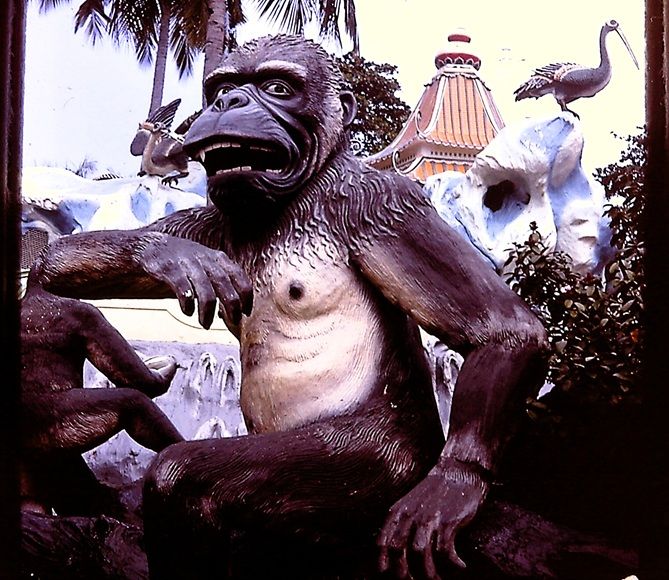 Alongside the many statues, the park also has a pagoda. This is an architectural feature rather than a mythological scene. It appears in the park as a decorative structure that fits the Chinese Buddhist style found throughout Haw Par Villa. Although it is not one of the main storytelling displays like the Ten Courts of Hell or the Journey to the West scenes, the pagoda adds to the overall feel of a traditional Chinese garden. Although most of the original sculptures are still in place, Haw Par Villa has changed a lot over the years. In the 1980s, the park went through a major redevelopment that updated many figures and redesigned the pathways. More recently, new features such as the Hell’s Museum, guided tours, and cultural events have been added. Even with these changes, the park has kept the quirky charm that made it a favourite family spot for generations. It remains a place where philosophy, folklore, humour, and spectacle all come together in one unforgettable setting. Today, Haw Par Villa is both a curious attraction and an important heritage site. It gives visitors a rare chance to step into a world shaped by early 20th century Asian imagination, where moral lessons are carved in concrete and mythological characters appear in bright, dramatic scenes. Every corner offers something new to discover. For travellers, history lovers, and anyone drawn to the unusual, it is still one of Singapore’s most fascinating and distinctive places to visit. References & Additional sources of Information https://www.hawparvilla.sg/ https://en.wikipedia.org/wiki/Tiger_Balm_Garden https://www.singaporetravelhub.com/attractions/haw-par-villa/ https://www.theislanddrum.com/haw-par-villa-singapore/ https://www.sciencepark.com.sg/en/discover/explore-beyond/Haw-Par-Villa.html https://sheiswanderlust.com/destinations/asia-travel-guide/singapore/attractions/haw-par-villa/ https://josiewanders.com/haw-par-villa/
|
 |
|
 |
|||


All Photographs were taken by and are copyright of Ron Gatepain


| Site Map |