





 |
|
|||||||||||||||
 |
||||||||||||||||











 |
|||
 |
Arica Saint Mark’s Cathedral – History, Architecture & Significance 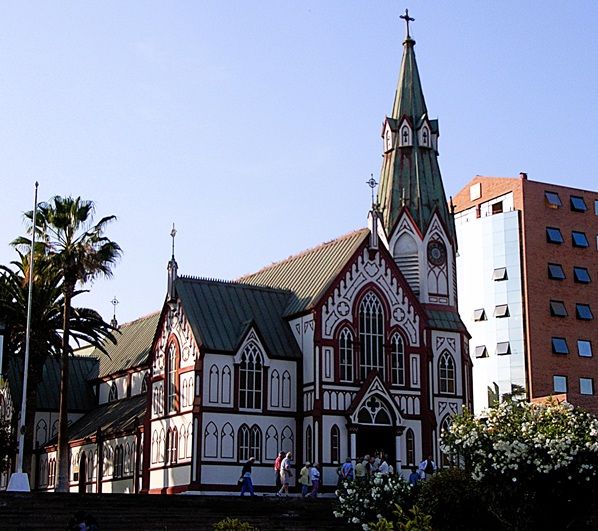
St. Mark’s Cathedral, with its striking red‑and‑white Gothic Revival façade, is one of the most distinctive churches in South America. Located in the heart of Arica, off the Plaza Colón, it was built in 1875–1876 to replace the 226‑year‑old church destroyed in an earthquake in 1868. Following its destruction, a local women’s committee petitioned Peruvian President José Balta for a new cathedral. As a point of interest, it was built when Arica was still Peruvian, later, following the War of the Pacific (1879 - 1884) it became Chilean. According to one source, the building was designed by Gustave Eiffel, who designed the Eiffel Tower in Paris. However, another source concludes that Eiffel did not design or build the cathedral. Instead, the Peruvian government purchased a fully prefabricated church from the United States, and Eiffel’s workshop was not involved. With a metal frame construction - unusual for churches of South America – which made it a hallmark of Eiffel’s engineering approach. The building was not designed for Arica but was originally intended for Ancón, Peru. It was constructed using a fully prefabricated metal construction system, which according to the latest research, was imported entirely from the United States, not France, and assembled on site: This made the building highly resistant to earthquakes The construction process took approximately one year, and the cathedral was inaugurated in 1876. Architecturally, it is Neo‑Gothic in style with Romanesque touches. It has a tall Tower and Spire, rising above the entrance. The square tower transitions into an octagonal spire, with small dormer‑like openings. Due to being constructed in metal they are quite light in weight. Over the doors and louvered lancet windows are pointed arches. 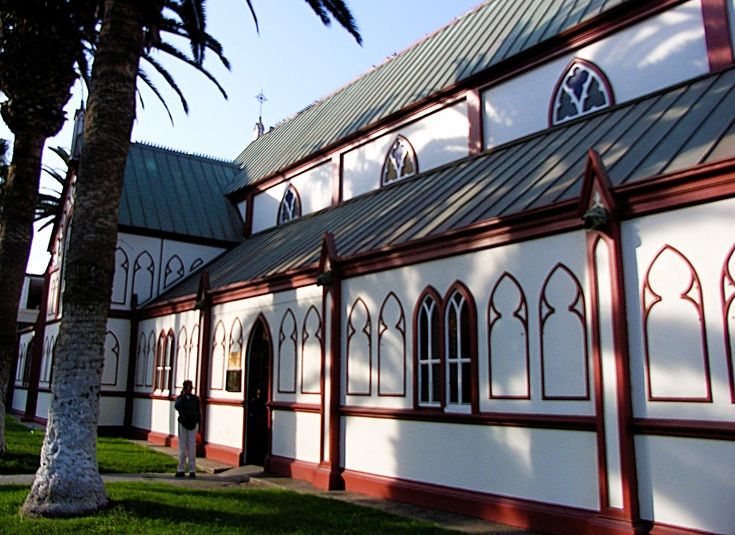 It has a central rose‑style window over the door at the end of the nave, which has been simplified for metal construction. The distinctive red on white exterior highlights the window tracery, door frames and buttress edges. The Main Portal has a tall, pointed arch framing the main doorway. The doors are constructed of wood and are set within a metal Gothic frame. Above the door is a triple‑arched window illuminating the nave. 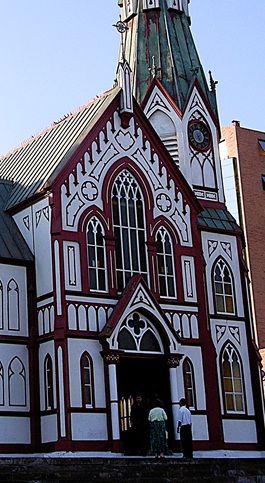 Passing through the doorway visitors enter into a single nave with wooden pews. The interior has no side aisles, chapels, or transepts. The narrowness of the interior width gives the space a sense of closeness and community, a layout that reinforces the building’s role as a parish cathedral rather than a monumental basilica. 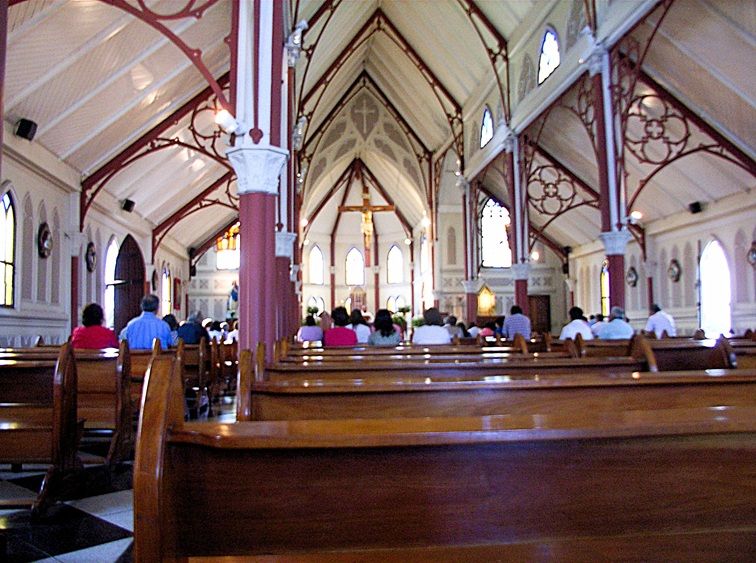 The glass of the lancet windows along the nave are simple geometric patterns rather than narrative scenes. The façade’s triple‑arched window illuminates the entrance area creating a calm, glowing atmosphere. At the far end is a raised sanctuary with a simple altar with a carved wooden crucifix with the painted figure of Christ with outstretched arms. 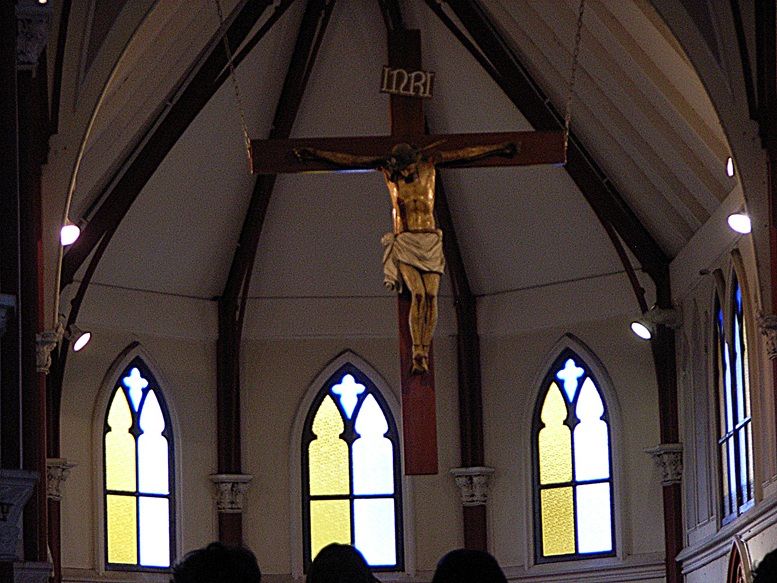 Due to available space and structural limits, the church does not have a pipe organ, music is provided by small instrument in a small choir loft/choir area near the entrance. Within the interior are several figures displayed in glass cases. Along one of the side walls of the nave, located in a horizontal glass case, is the reclining male figure, a representation of the Dead Christ (Cristo Yacente) - also known as Christ in the Tomb. This is a traditional devotional sculpture found in many Latin American Catholic churches, especially those with 19th‑century Peruvian or Chilean heritage. 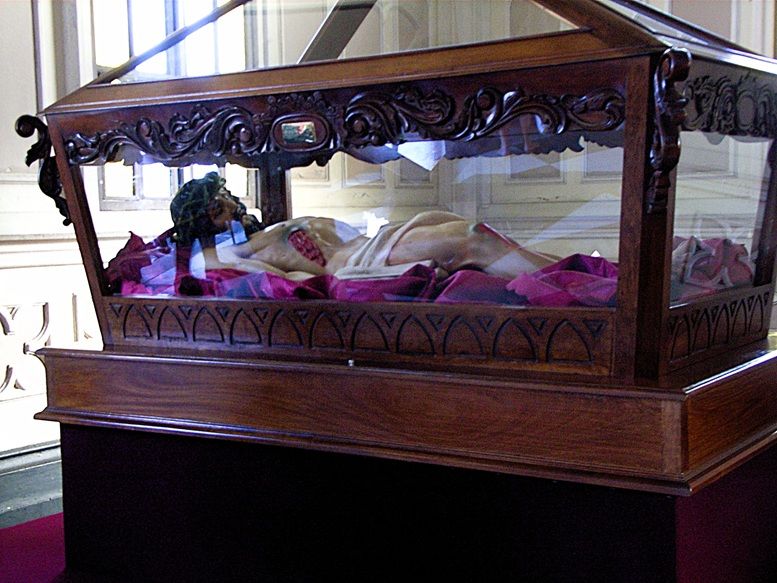 These figures are traditionally kept in glass coffins or vitrines because they are used in Holy Week processions, especially Good Friday. They are considered highly sacred devotional images. The figure is believed to date from late 19th century, matching the cathedral’s early furnishings and is consistent with devotional art imported from Peru at the time.
|
 |
|
 |
|||


All Photographs were taken by and are copyright of Ron Gatepain


| Site Map |