





 |
|
|||||||||||||||
 |
||||||||||||||||











 |
|||
 |
Ho Chi Minh City (Saigon) Reunification Palace – History, Architecture & Significance 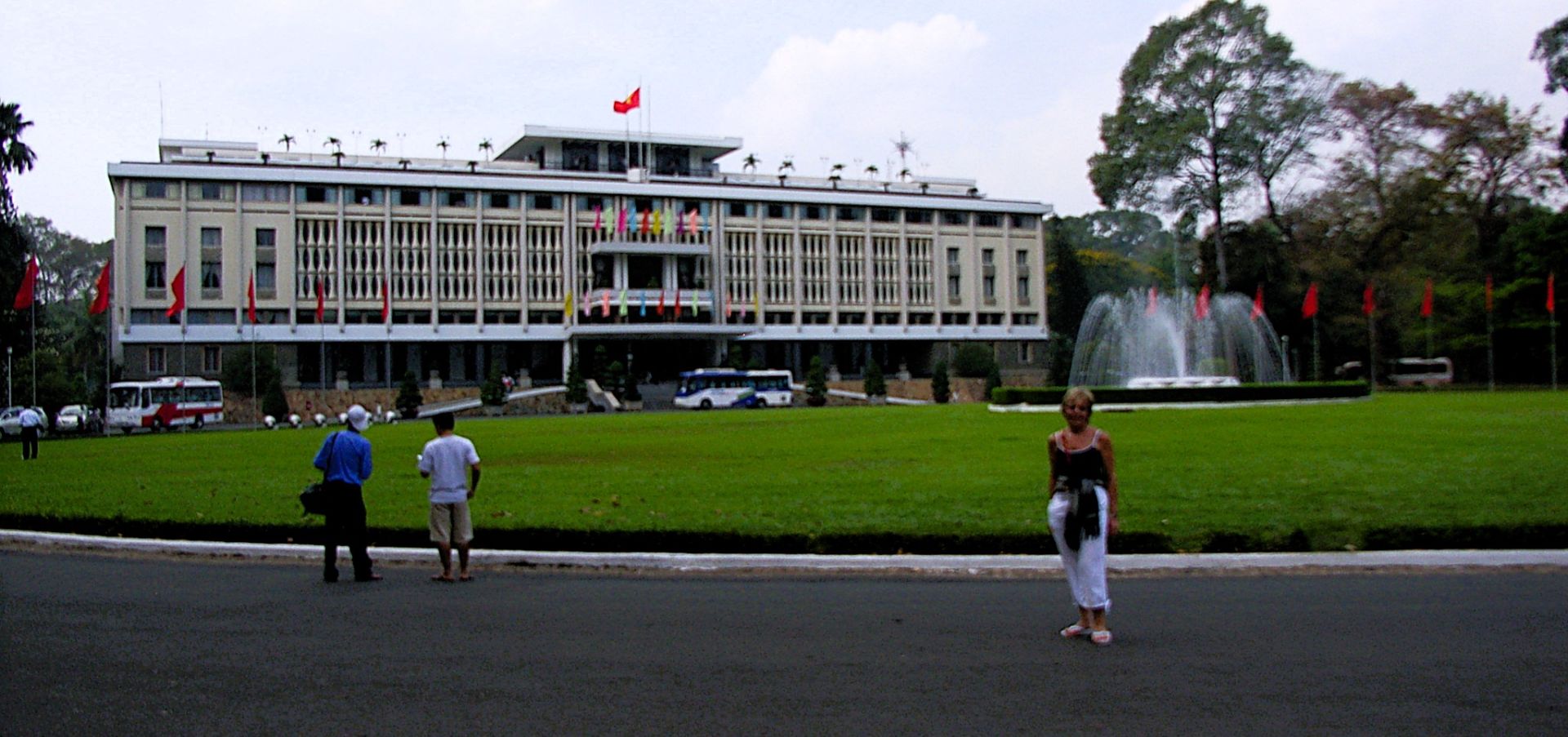
Located on Nam Ky Khoi Nghia Street in central Ho Chi Minh City, is the Independence Palace (Dinh Độc Lập), although after 1975 it also became widely known as the Reunification Palace. Before 1975 it served as the Presidential Palace of South Vietnam but on April 30, 1975: North Vietnamese tanks entered its grounds during the Fall of Saigon which was a defining moment that symbolised the end of the war and the reunification of North and South Vietnam. Prior to this event the city was known as Saigon whereon after it became known as Ho Chi Minh City. After 1975 the Palace became known as the Reunification Palace, commemorating that event. Today, both names are used interchangeably in tourism, signage, and official descriptions. Originating as a French colonial palace called Norodom Palace, built by the French colonial administration between 1868 and 1873, using imported French materials and skilled workers brought from Canton and Hong Kong, creating a grand neo‑Baroque palace intended to showcase French power, this served as the residence of French governors and later South Vietnamese presidents. In 1962, the palace was bombed when two South Vietnamese Air Force pilots attempted a coup, and bombing of the palace, resulted in severe damage. President Ngô Đình Diệm ordered it demolished and replaced with a new, modern one. The modern palace was completed in 1966, and it became the Independence Palace — the nerve centre of South Vietnam’s government. In the 1960s, this was the largest and most expensive building project in southern Vietnam. On April 30, 1975, North Vietnamese tanks crashed through the front gates resulting in President Dương Văn Minh surrendering, which resulted in the end of the Vietnam War and the reunification of North and South Vietnam, it was then that the building became known as the Reunification Palace. Today, it is a preserved time capsule open to visitors, which is kept almost exactly as it was in 1975. Architecturally, it is a blend of 1960s modernism and Vietnamese aesthetics. It has clean lines, open courtyards, symbolic motifs, and a layout designed for both ceremony and security. Constructed on an area of 12 hectares, it includes a large mansion with a width of 80 meters. To the front of the Palace is an oval lawn with a 102-meter diameter. Its lush greenery creates a calming, refreshing atmosphere. A semicircular lake is filled with lotus and water lilies, resembling the peaceful lakes found in Vietnam’s ancient temples and pagodas. Two green parks sit outside the fences in front and behind the Palace. The main building consists of three floors, two mezzanines, a terrace, a ground floor, and a basement. Covering 20,000m², it contains 95 rooms, each designed and decorated for a specific function. After 1975, some rooms in the main building remained in use, while others were repurposed for tourism. The interior contains a number of rooms that are open to tourists. One of the most notable is the Conference Hall (also called the Cabinet Meeting Room). This is a large rectangular chamber with its 1960s modernist décor; it has a raised platform with microphones, long conference tables and rows of chairs for ministers. 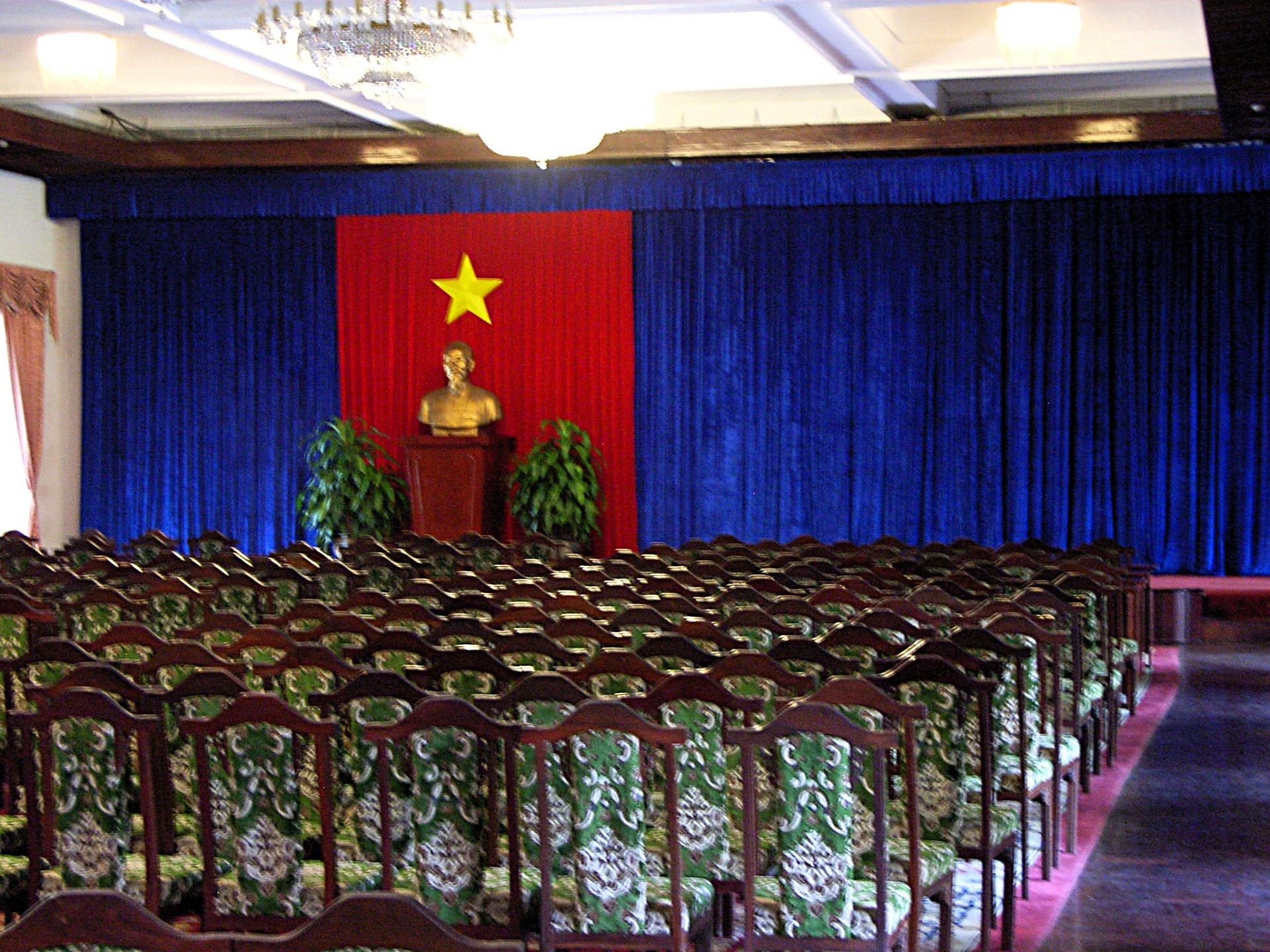 This room is most associated with official presentations and decision‑making during the Republic of Vietnam era. It was used for government conferences, cabinet meetings, strategic briefings, formal presentations and high‑level political announcements. The hall is preserved almost exactly as it was in the 1970s with original furniture, period microphones and communication equipment and with wall‑mounted maps and insignia. Another notable room is the Credentials Presentation Room with its painting Bình Ngô Đại Cáo (“The Proclamation of Victory”), which consists of 40 panels depicting the peaceful life of Vietnam in the 15th century. This room is one of the most elegant and symbolically charged spaces in the palace. Its design communicates diplomacy, legitimacy, and national identity and is where ambassadors once presented their letters of credence to the President of South Vietnam. Prominent in the room is the presentation desk, which is where ambassadors formally presented their credentials. This today is protected by a glass screen. 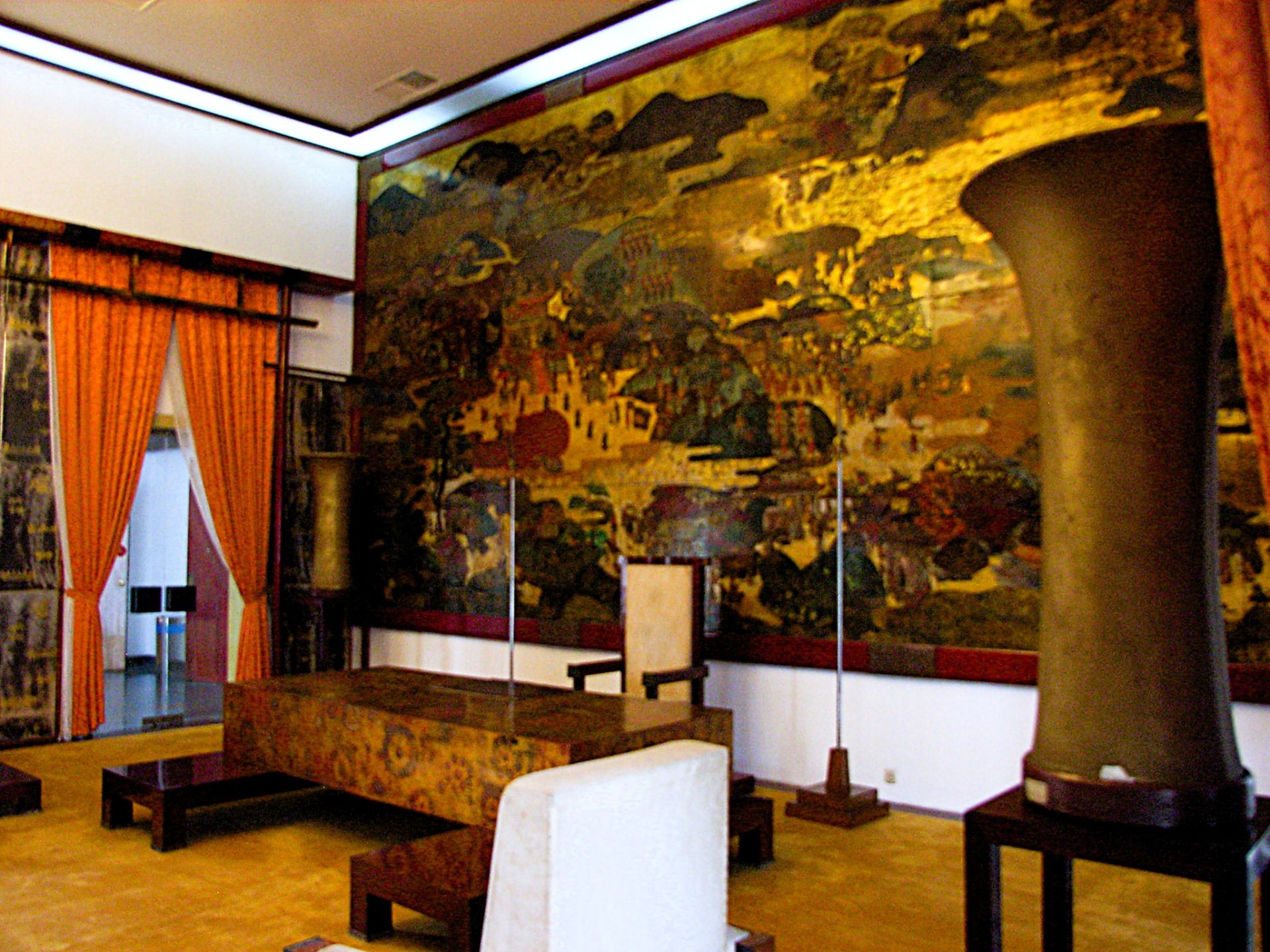 Within the Credentials Presentation Room is a large vase which forms part of the palace’s curated collection of pre‑1975 furnishings and ceremonial décor, which was restored and expanded when the palace opened to the public in 1990 after years of preservation work. Large metal vases in Vietnamese state rooms traditionally symbolize stability, authority, and cultural refinement. In the Credential Room, they flank the central lacquer mural to create a balanced, formal backdrop for ambassadorial ceremonies. These vases are typically made of bronze or brass, materials associated with longevity and state prestige in Vietnamese decorative arts. The vase, a state ceremonial piece, is intentionally oversized. Its scale and metallic finish were chosen to anchor the room visually and to complement the monumental lacquer mural. They are some of the over 5,000 historical artifacts within the Reunification Palace. Other rooms that can be visited include the Ballroom, which was used for state ceremonies, Banquet Chamber, Presidential Office, and the War Command Bunker with its maps, radios and strategy rooms beneath the palace. The palace also had a Rooftop Helicopter Pad in case of emergency evacuations. The Reunification Palace is a symbol of national identity and resilience. It represents the end of the Vietnam War and the reunification Vietnam. Today it is used as both a museum and a venue for state events and official receptions.
|
 |
|
 |
|||


All Photographs were taken by and are copyright of Ron Gatepain


| Site Map |