








 |
|
|||||||||||||||
 |
||||||||||||||||











 |
|||
 |
Hanoi One Pillar Pagoda – History, Architecture & Significance 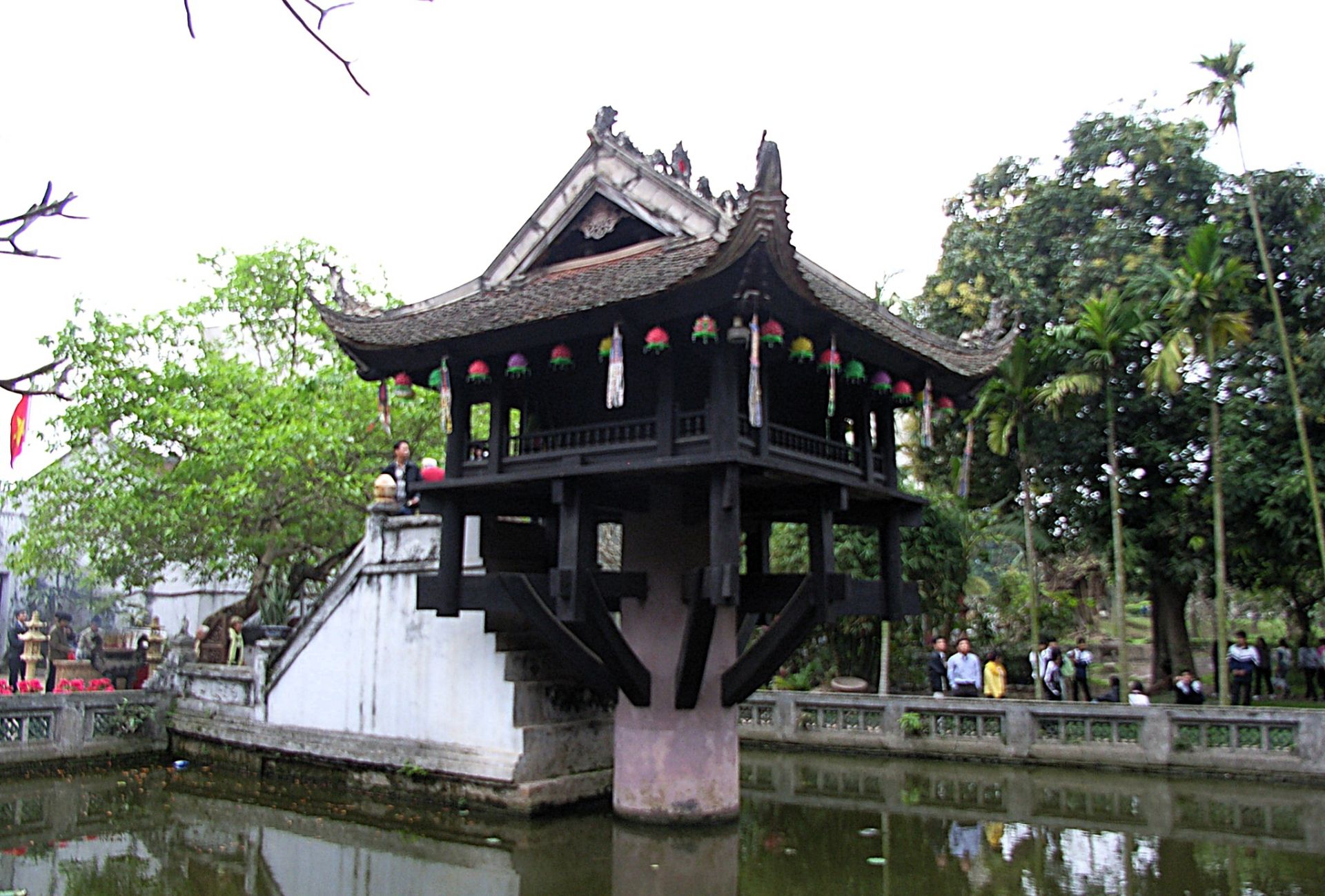
Standing within the Diên Hựu Pagoda complex in Ba Đình District, right beside the Ho Chi Minh Mausoleum and Ba Đình Square, places the One Pillar Pagoda at the ceremonial heart of modern Hanoi. Consisting of a single stone pillar (about 4 meters tall) which supports a small wooden shrine, representing a lotus stalk. The shrine above symbolizes a lotus blossom, a Buddhist emblem of purity rising above muddy waters. The surrounding square pond completes the lotus metaphor, creating the impression of a flower floating serenely on water. Built in 1049 by Emperor Lý Thái Tông (1028 - 1054), the Pogoda is one of Vietnam’s most iconic Buddhist temples. According to Legend, the emperor - who had no heir - dreamed of the Bodhisattva Avalokiteśvara (Quan Âm) handing him a baby while seated on a lotus. Immediately after this dream, the king married a peasant girl who gave him a son and heir. This resulted in the Emperor building the pagoda in gratitude, following the monk Thiền Tuệ’s advice to recreate the lotus vision as a shrine rising from a pond. Historical accounts indicate that the original pagoda was primarily built of wood, set atop a single stone pillar rising from the lotus pond. This aligns with typical Lý‑dynasty temple architecture, which favoured timber structures for shrines and halls. During the Lý Dynasty (11th century) it was the site of annual royal Vesak ceremonies, including Buddha-bathing rituals and symbolic bird releases. In 1105, work was carried out by Emperor Lý Nhân Tông, who commissioned a massive bell. This turned out to be too heavy to install, and it became famous as the “Bell of the Turtles’ Field.” In 1954 the Pagoda was destroyed by explosives by retreating French forces. This was not a result of any anti‑Buddhist intent but a political and military gesture during a chaotic retreat as a way to undermine the symbolic victory of the Việt Minh taking control of the capital. After the pagoda was destroyed, it was rebuilt by the Vietnamese government using a combination of wood and concrete - the concrete providing structural stability while the wooden shrine above preserves the traditional appearance. This shift from all‑wood to a wood‑and‑concrete hybrid is noted in modern historical summaries. The pagoda remains a powerful emblem of resilience and spiritual continuity, and its compact scale belies its cultural weight: it is both a national symbol and a living place of devotion and today it is one of Vietnam’s most iconic temples.
|
 |
|
 |
|||


All Photographs were taken by and are copyright of Ron Gatepain


| Site Map |