






 |
|
|||||||||||||||
 |
||||||||||||||||











 |
|||
 |
Marathon – History, Architecture & Significance 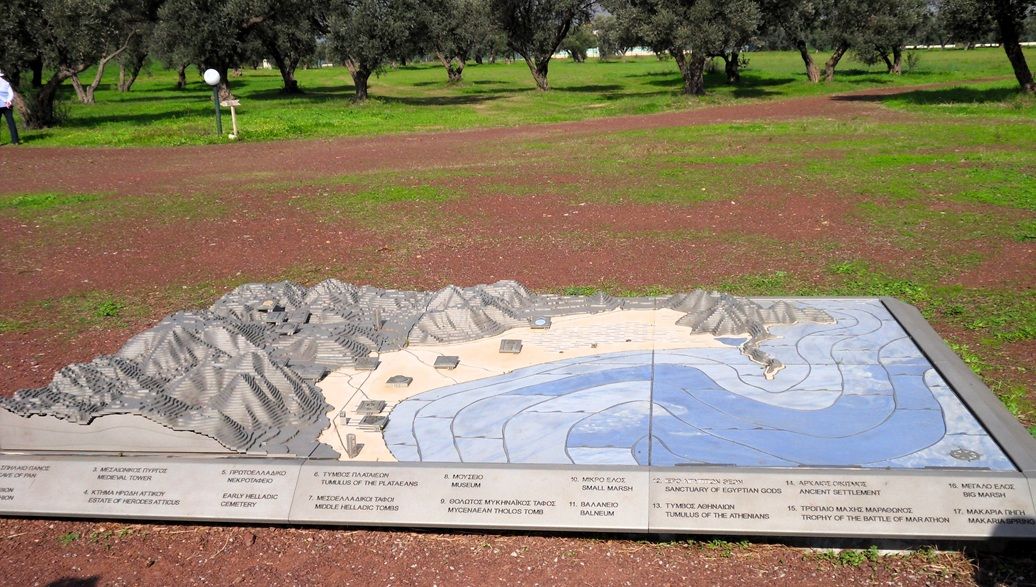
The town of Marathon, located on the broad coastal plain northeast of Athens, is one of the most historically significant landscapes in Greece. It was here, in 490 BCE, that the Athenians and their Plataean allies defeated the invading Persian army in a battle that became a defining moment in the development of Classical Greece. The plain still preserves the topography of the battlefield, together with the burial mounds, commemorative monuments, and archaeological remains associated with the event. The Battle of Marathon marked the end of the first Persian attempt to conquer mainland Greece. The Persian forces under Datis and Artafernes landed on the beach at Marathon intending to march on Athens. The Athenians, commanded by Miltiades, advanced rapidly from the city and took up position on the plain. When the moment was judged favourable, the Greek hoplites launched a direct assault across the open ground. The marshy terrain restricted the Persian cavalry, and the heavily armed Greek infantry broke the Persian line, driving many back to their ships. The victory was decisive and became central to Athenian identity, celebrated in art, literature, and public memory. Following the battle, the Athenians buried their 192 fallen soldiers on the field itself, raising a large earthen tumulus approximately nine metres high. This mound, known as the Soros, remains the most prominent monument on the plain. Its form is simple but powerful, preserving the ancient funerary landscape exactly where the fighting occurred. 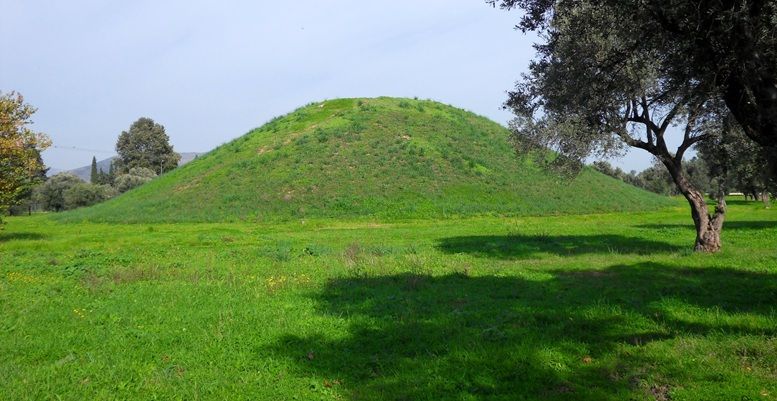 A separate burial mound was constructed for the Plataeans, who fought alongside the Athenians and were honoured for their contribution. After the battle, the Athenians erected a trophy (tropaion) at the point where the Persian line collapsed. Initially made of wood and decorated with captured Persian arms, it was later replaced by a permanent marble monument, dated to around 470–460 BC. This Classical trophy consisted of a tall, fluted marble column surmounted by a statue of Nike (Victory), forming one of the earliest known examples of a monumental battlefield trophy. Although the original structure no longer survives intact, significant fragments of the column and its capital were recovered from the area. These are now displayed in the Archaeological Museum of Marathon, where they provide rare physical evidence of Classical commemorative architecture. The fragments include a section of the fluted marble shaft, showing early Classical workmanship and parts of the capital, restored in 2004 and further completed in 2016 under the direction of Professor Manolis Korres, allowing the original proportions to be understood. 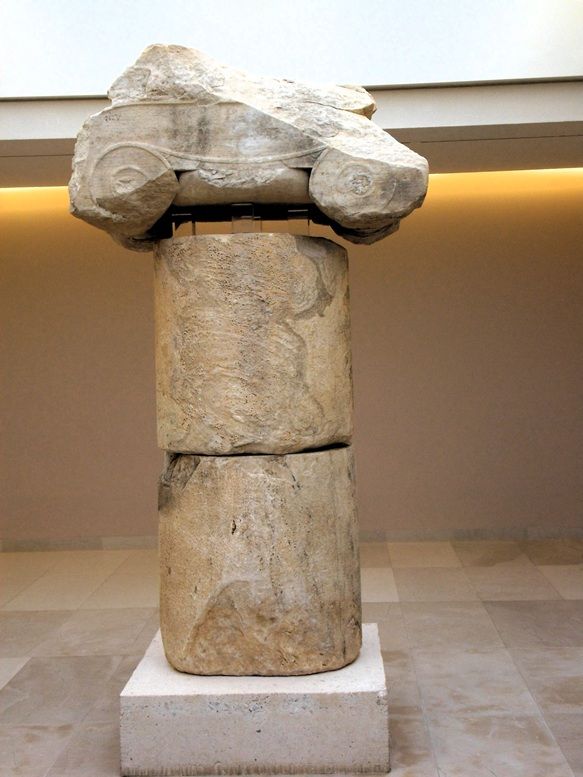 A full scale modern replica of the trophy now stands near the small church of Panagia Mesosporitissa, marking the approximate location of the ancient monument and giving visitors a sense of its original appearance in the landscape. Following the battle a messenger was sent from the battlefield of Marathon to Athens to announce victory over the Persians. This was delivered by Pheidippides who ran the 26 miles and 385 yards (42.195 km). The modern marathon race began with the first Olympic Marathon on 10 April 1896, created for the inaugural modern Olympic Games in Athens. The event was won by the Greek runner Spyridon Louis, and its success immediately established the marathon as a permanent feature of international athletics. The official starting line of the modern Athens Marathon was constructed in 1996 for the 100th anniversary of the modern Olympic Marathon (1896–1996). Before 1996, the start area was marked only with temporary paint or removable markers for each year’s race. The permanent marble starting line was installed on the road beside the tumulus and the historic starting point used in the 1896 Olympic race and is still used today. The area also contains the Marathon Flame Altar, installed at the same time, which is used for the annual lighting ceremony. 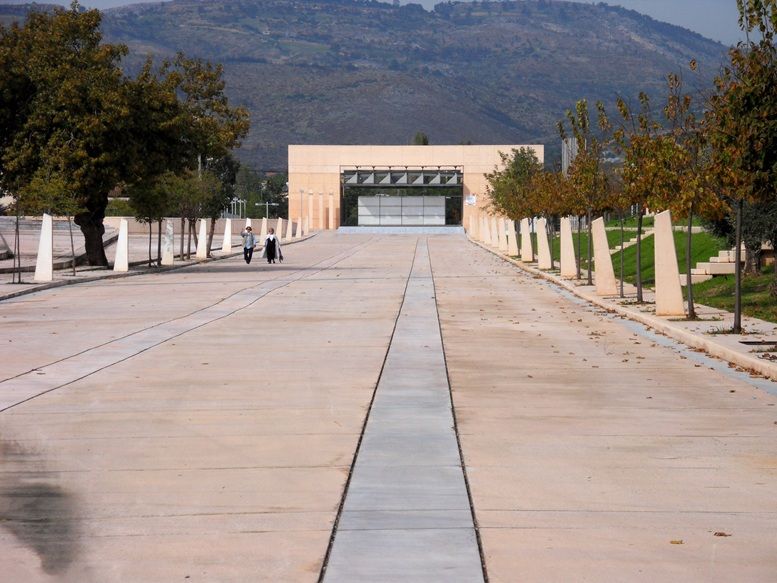 The wider region contains several important archaeological sites that illustrate the long history of the area. These include the prehistoric cemeteries of Tsepi and Vranas, showing continuous habitation from the Neolithic to the Bronze Age. Finds from the cemeteries are displayed within the onsite museum and the mid period tumulus cemetery at Vranas, located close to the modern museum. These sites demonstrate that Marathon was a significant settlement area long before and after the famous battle. Around the site are a number of information displays providing details of the site and the battle. 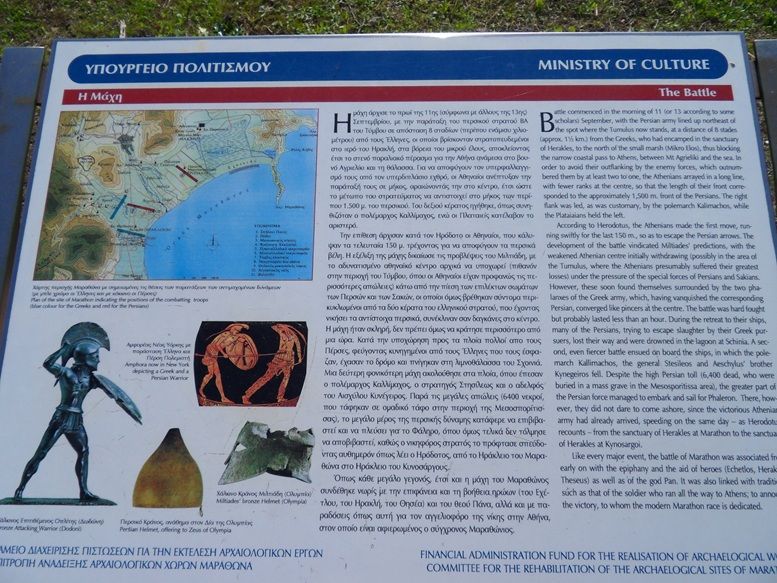 The Archaeological Museum, situated near the prehistoric cemeteries, presents the history of the region from prehistory to the Roman era. It was built in 1975 to house the growing number of finds from excavations on the Marathon plain. Its construction followed major archaeological work in the late 1960s and early 1970s, which uncovered important prehistoric cemeteries, Classical material linked to the battle, and Roman period remains from the sanctuary at Brexiza. The museum underwent a major renovation in 1994, modernising its galleries and improving conservation facilities. 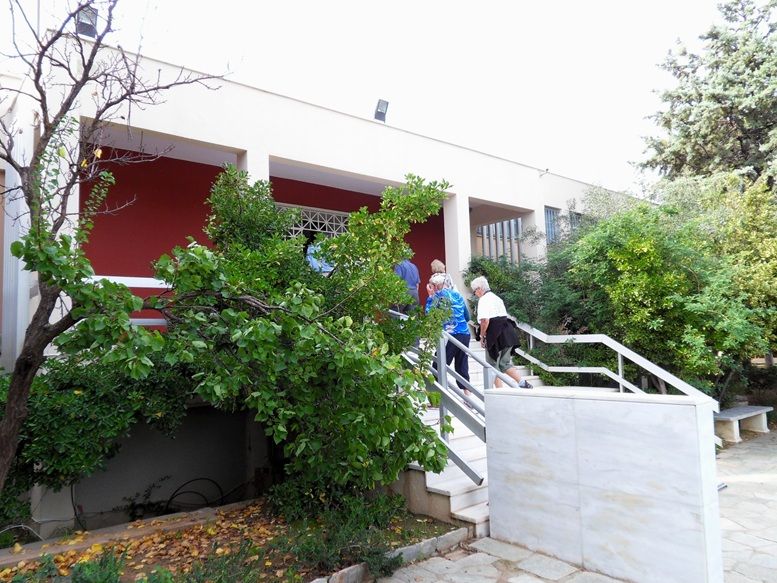 Within the museum are prehistoric burial mounds. These date back to the Early-Helladic period (approximately 3000-2300 BCE), showcasing ancient funerary practices. 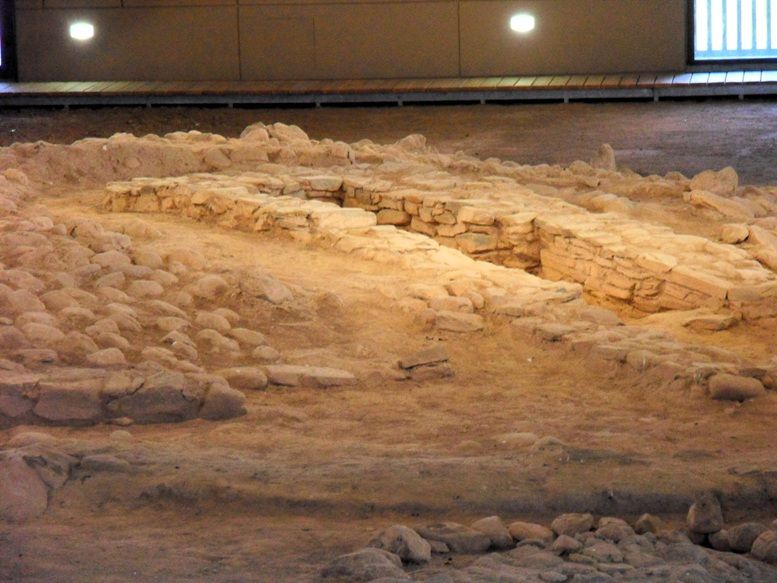 The display within the museum also includes sculptures and artifacts. 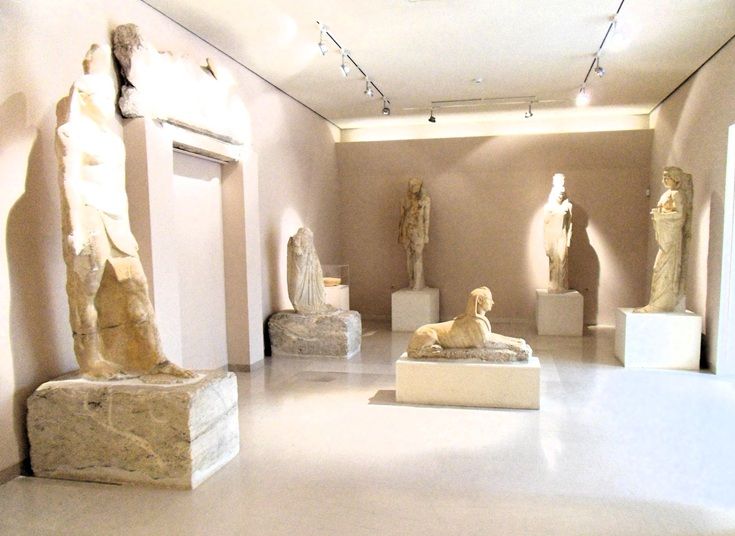 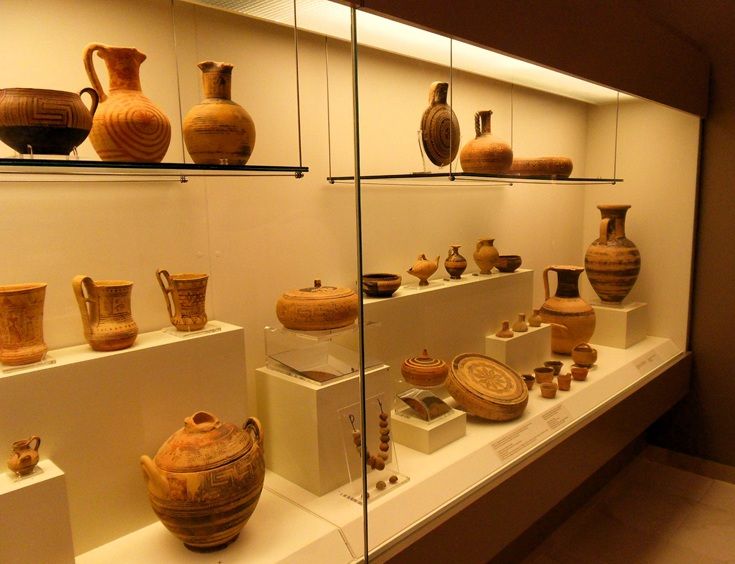 The funerary stele of a woman is carved in the form of a naiskos — a small temple like façade with side pilasters and a triangular pediment. This architectural framing symbolises dignity and permanence, presenting the grave as a “house” for the deceased. It depicts her in a calm, idealised form seated as a servant attends. The seated pose is associated with honour and social standing. These were a common form of grave marker in Classical and Hellenistic Greece. 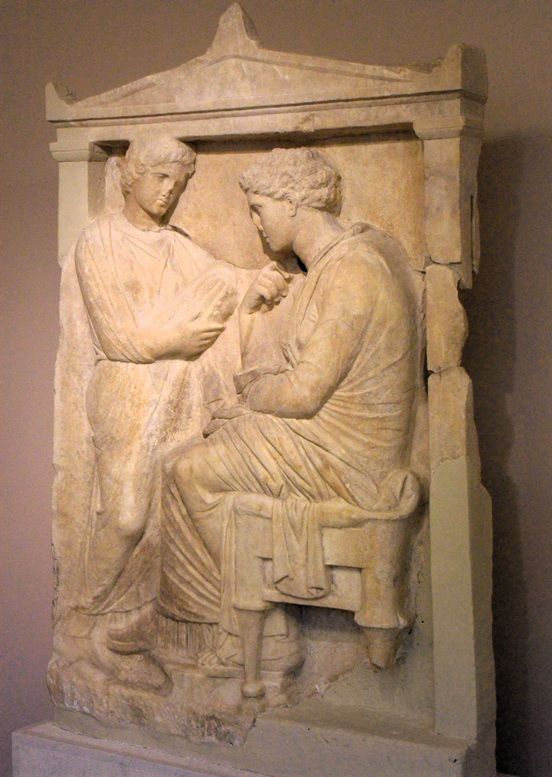 One of the most famous exhibits is the Ephesus of Marathon or Marathon Boy which is an ancient Greek bronze statue, found in the Aegean Sea in the Bay of Marathon in 1925. Dating to around 340-330 BCE it is believed, due to the band on the head, which ends in an upright blade above the forehead, that the boy depicted is the winner of an athletics competition. The soft muscles and exaggerated posture, the raised arm and the weight distribution indicate that it originally leaned against a vertical support, such as a column. It has a height of 1.30 m and is one of the masterpieces of the late classical period. 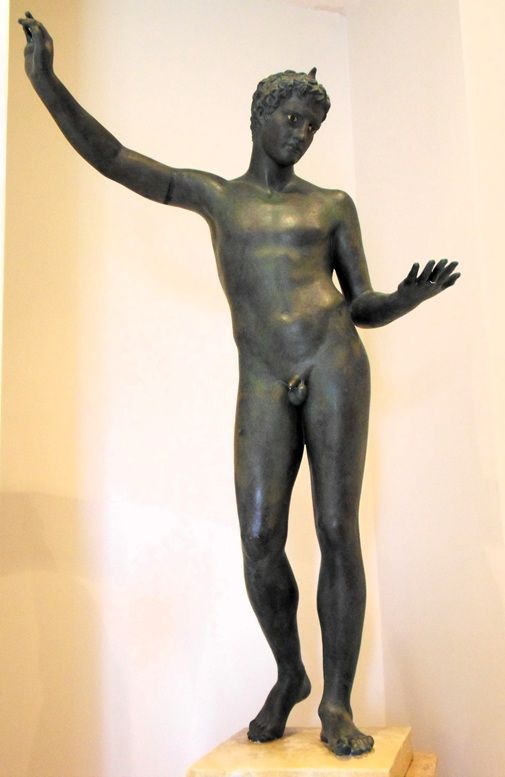 Marathon remains a site where history, archaeology, and memory converge. The preserved battlefield, the burial mounds of the fallen, the reconstructed trophy, and the museum’s collections allow visitors to explore one of antiquity’s most decisive engagements in its original setting. Together, these elements make Marathon an essential site for understanding ancient warfare, Athenian identity, and the cultural legacy of Classical Greece. References and Additional Information https://en.wikipedia.org/wiki/Marathon,_Greece https://en.wikipedia.org/wiki/Marathon https://archaeologicalmuseums.gr/en/museum/5df34af3deca5e2d79e8c18a/archaeological-museum-of-marathon https://www.britannica.com/event/Battle-of-Marathon https://www.worldhistory.org/marathon/ https://europe.factsanddetails.com/article/entry-926.html
|
 |
|
 |
|||


All Photographs were taken by and are copyright of Ron Gatepain


| Site Map |