





 |
|
|||||||||||||||
 |
||||||||||||||||











 |
|||
 |
Kristiansand Kristiansand Cathedral – History, Architecture & Significance 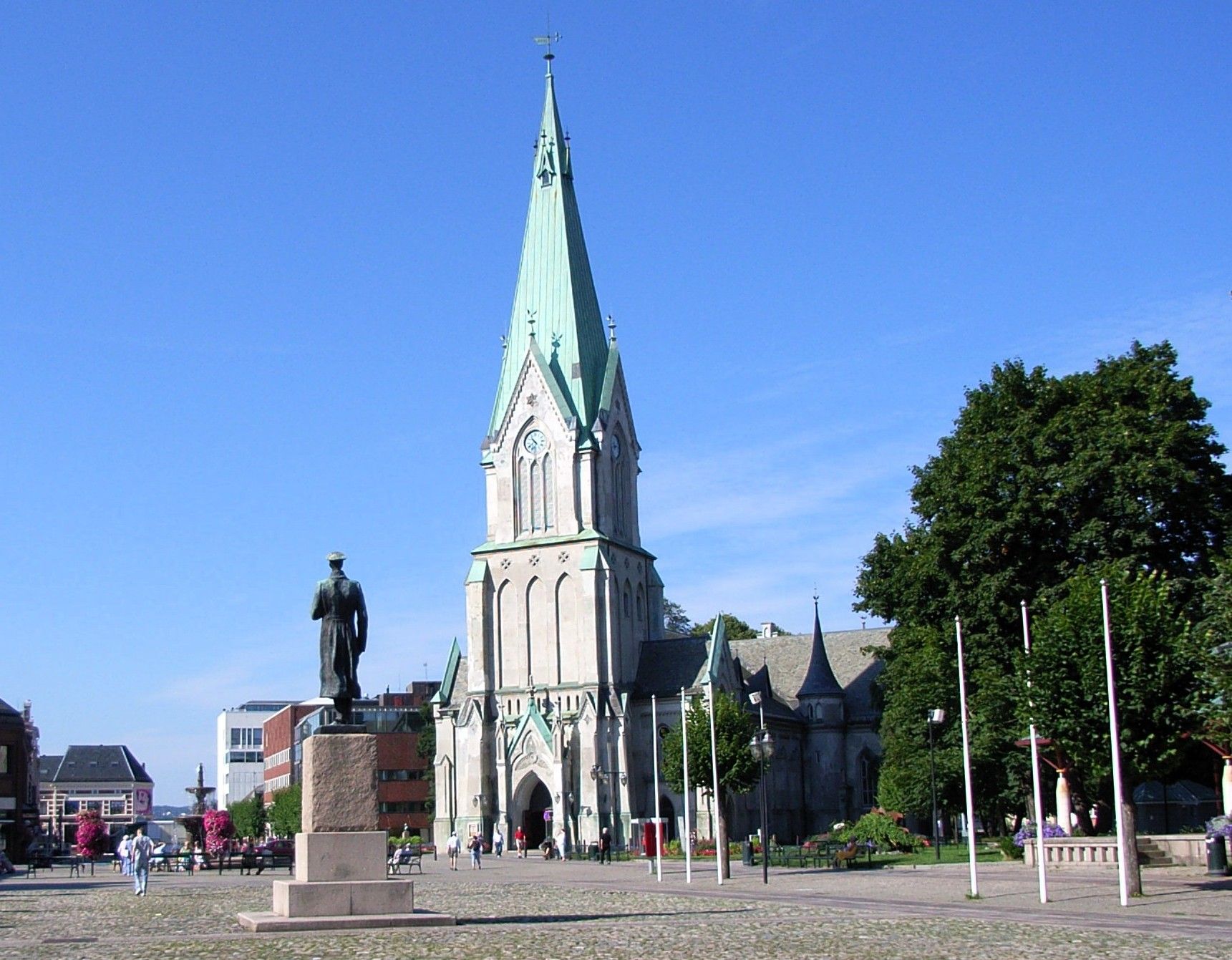
The Kristiansand Cathedral stands in the centre of the city on the site that has contained a church since 1645. The first church on the site was Trinity Church, a small wooden building - constructed shortly after Kristiansand was founded in 1641 - to serve the new town’s population. The church was replaced with a new stone cathedral when Kristiansand was elevated to a diocesan seat in 1682. That resulted in the construction of Our Saviour’s Church, which was consecrated in 1696. This building was destroyed by fire in 1734 and was replaced in 1738 with a new one, although this was also to be destroyed by fire in 1880 and that resulted in the construction of the current building in 1885. Designed by Henrik Thrap‑Meyer, Kristiansand Cathedral is one of Norway’s largest and most striking Neo‑Gothic churches. An active cathedral of the Church of Norway, it serves as the seat of the Bishop of Agder and Telemark. Neo‑Gothic in style it is constructed in pale brick with tall lancet windows with pointed Gothic arches and decorative friezes. Rising above the entrance from the square is the tower which is also constructed in pale yellow brick like the rest of the cathedral. It is square in plan, rising in stepped stages that are supported by brick buttresses at the corners with each stage becoming slightly narrower. It contains tall, narrow lancet windows on each face and has a clock on the upper stage. Rising above the tower to a height of 70 metres is the copper clad spire with four small pinnacles sitting at the base of the spire. The transition from tower to spire is seamless. In April 1940, during World War II, the spire was damaged by artillery fire during the German attack on Kristiansand, this was repaired following the war. Standing in the square, on a stone pedestal directly in front of Kristiansand Cathedral’s west façade, is a bronze statue of King Haakon VII (1872-1957, r.1905-1957), Norway’s first monarch after the dissolution of the union with Sweden in 1905 and a central figure of Norwegian resistance during World War II. Constructed in brick and cement, the cathedral is finished internally with light wood and plaster. The internal layout is a cruciform plan (cross shaped), typical of Gothic Revival churches. It has Neo Gothic detailing of pointed arches, ribbed vaulting, slender columns. 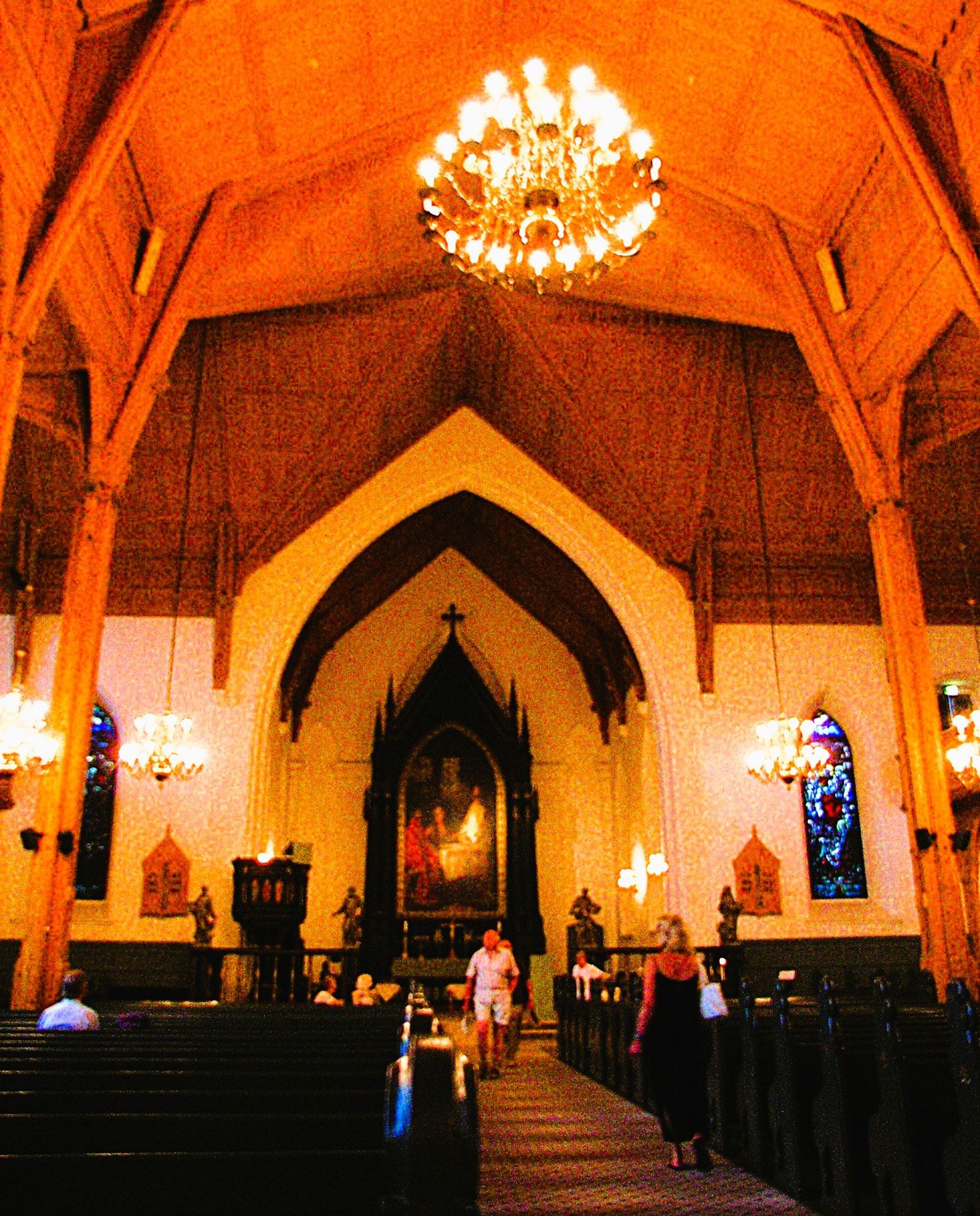 At the west end is the Chancel, which is unusual and is a reversal caused by reusing surviving walls after the 1880 fire. Galleries are located along the transepts and at the rear, these were originally used to increase seating capacity. Originally the seating catered for more than 2,000 people as the 1885 benches were extremely close together, the nave had narrow aisles and even counted standing-room areas as part of its capacity. In the 20th century, due to Modern fire and safety regulations a series of refurbishments dramatically reduced this number. Aisles had to be widened, exits cleared, and standing-room zones eliminated. This alone removed hundreds of places. Modern spacing, wider pews, and the removal of cramped gallery seating reduced capacity further. Wheelchair spaces, circulation zones, and flexible seating areas replaced fixed benches. The cathedral’s evolving role as a concert venue requiring better sightlines, open floor areas, and improved acoustics required removing or reconfiguring seating. These factors reduced the capacity to 1000. The altar features a tall Gothic frame and the painting commissioned specifically for the new cathedral to replace the artwork lost in the 1880 fire. Entitled The Resurrection of Christ by Eilif Peterssen (1852–1928) one of Norway’s leading painters of the late 19th century, known for his luminous, dramatic religious works. 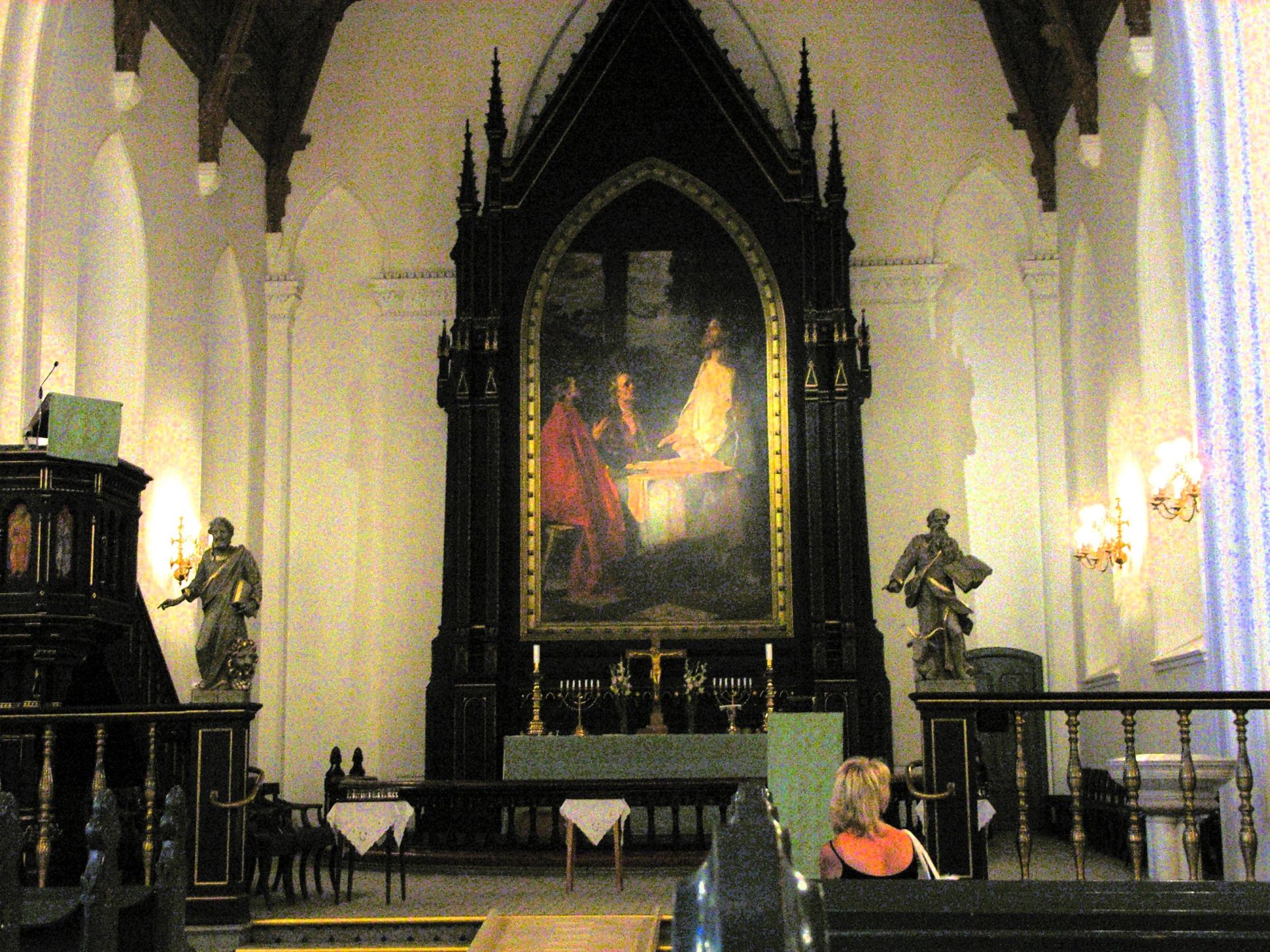 The statues on either side of the altar are St. John the Evangelist (with the eagle) and St. Luke (with the ox). They were carved around 1750 by the Norwegian woodcarver Michael Røyel and are considered some of the finest Norwegian church sculpture of the 18th century. These were part of the previous church on this site and were saved from the 1880 fire and incorporated into the 1885 cathedral. On the north side of the chancel, slightly forward of the altar and elevated for acoustics and visibility, is the pulpit. The Neo Gothic wooden structure does not contain any statues, although statues of the four Evangelist (Matthew, Mark, Luke, John), carved by Michael Røyel around 1750, are close to it. It does contains 12 small paintings of the apostles which were painted by Hugo Lous Mohr (1889–1970) for the cathedral’s 50 year anniversary. 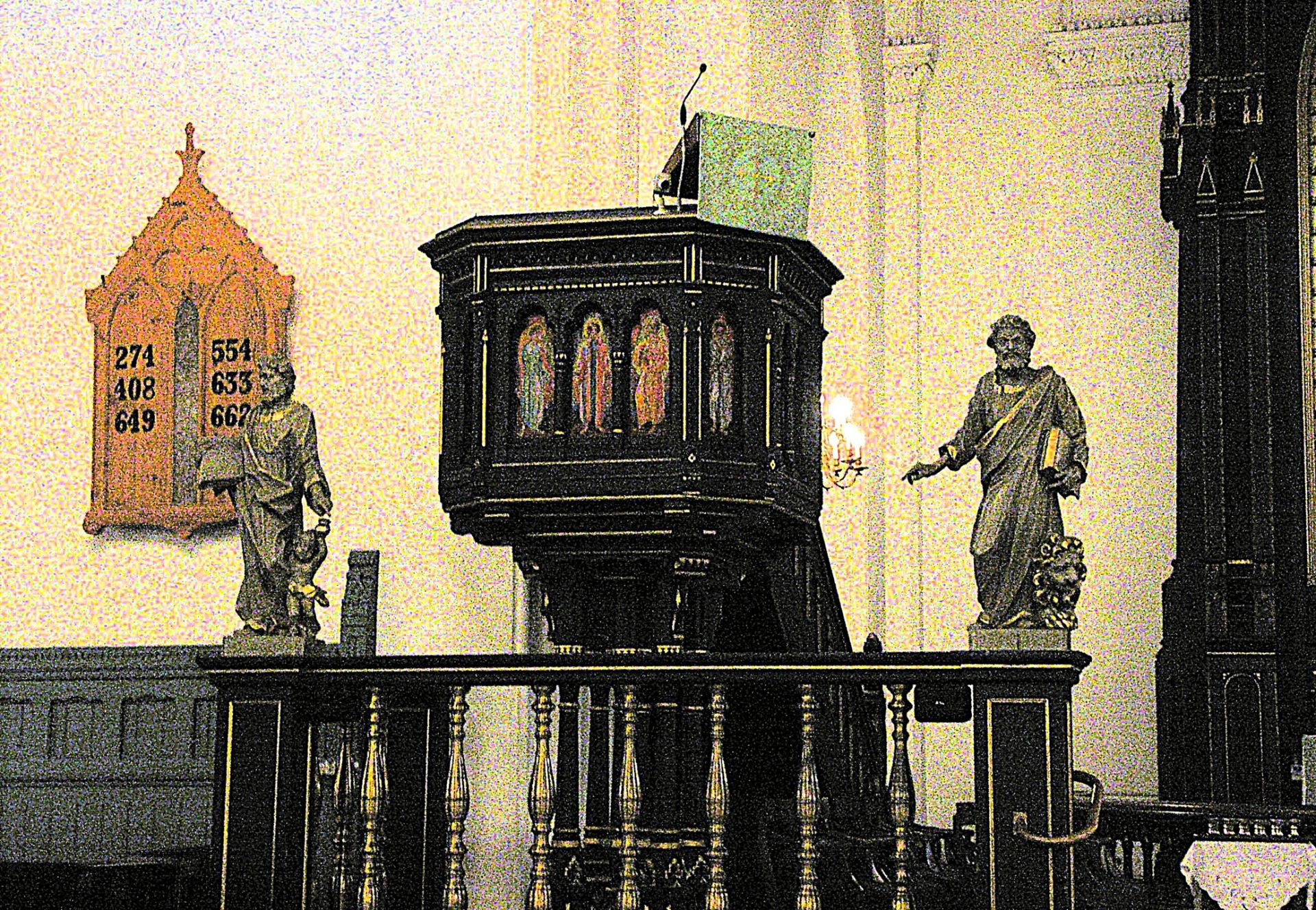 The cathedral has two organs: The main one is located in the balcony above the east end of the nave. This was built in 2013 by Klais in Germany and has a large main section with 58 stops. The organ’s front is designed to look like the original 1885 organ case, to fit in the cathedral’s Gothic style. It’s used for church services, concerts, and summer recitals, and due to the cathedral’s good acoustics, is known as one of the best organs in southern Norway. The smaller choir organ, located on the northern gallery (the side balcony) has 9 stops and is used for choral and smaller liturgical work. Both organs can be played from the same four manual console, which is positioned on the west gallery. Kristiansand Cathedral is a classic expression of late 19th century Neo Gothic verticality and is one of the most recognisable silhouettes in southern Norway.
|
 |
|
 |
|||


All Photographs were taken by and are copyright of Ron Gatepain


| Site Map |