





 |
|
|||||||||||||||
 |
||||||||||||||||











 |
|||
 |
Hanoi House of Ho Chi Minh (House No.54) – History, Architecture & Significance 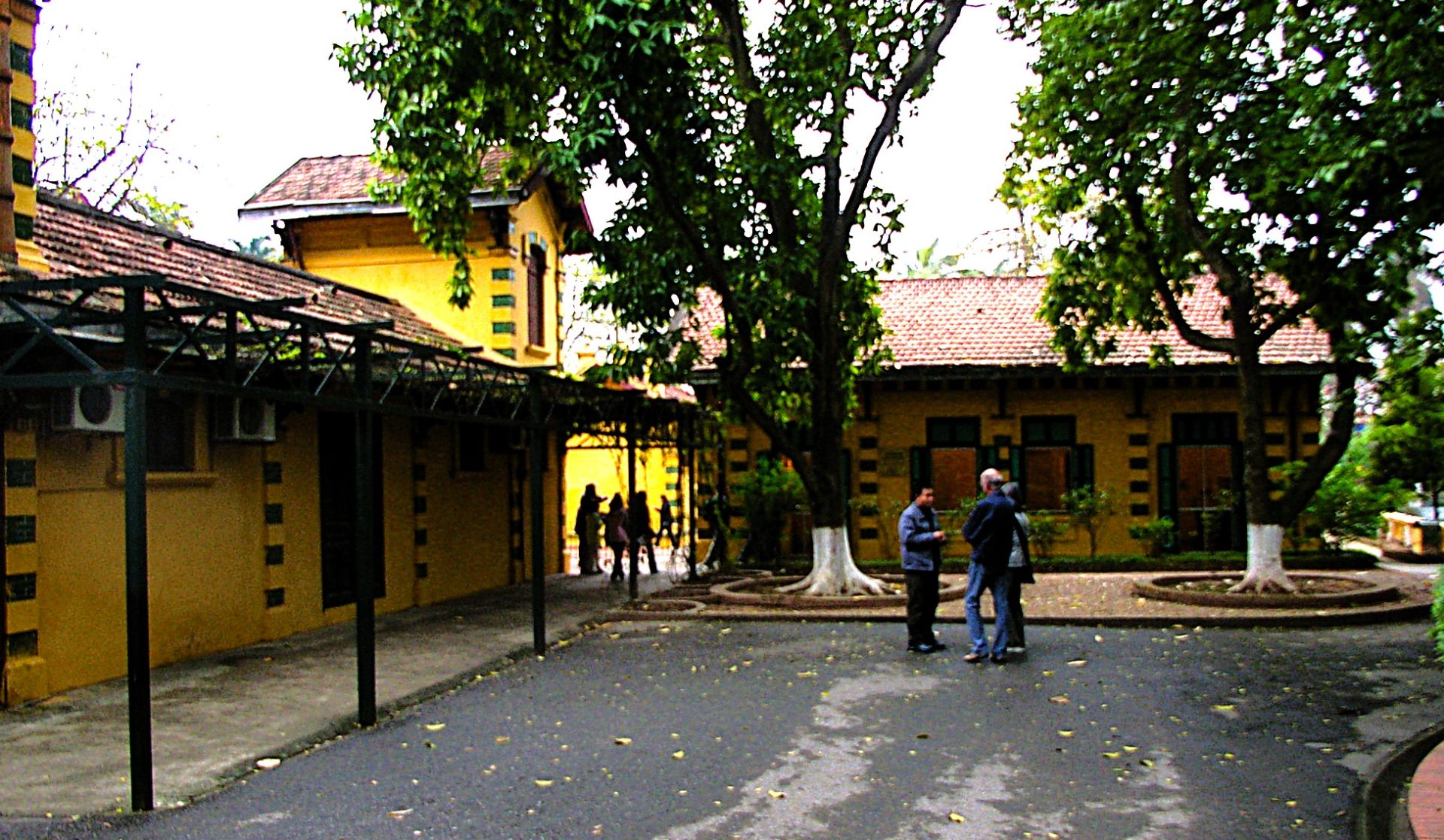
House No. 54, located within the Presidential Palace Complex in Hanoi, was the home of Ho Chi Minh - the Founder of Modern Vietnam - from 1954 to 1958. Ho Chi Minh (19 May 1890 – 2 September 1969) was a Vietnamese revolutionary, nationalist leader, and statesman who became the central figure in Vietnam’s struggle for independence and unification. In 1945 he founded the Democratic Republic of Vietnam, commonly known as North Vietnam, and served as its first prime minister (1945–1955) and first president (1946–1969). He led the country through the First Indochina War against France and the early years of the Vietnam War. His lifelong mission was to end colonial rule in Vietnam. In 1941, he helped create the Viet Minh, the nationalist‑communist coalition that fought for independence from France. He declared Vietnam’s independence on 2 September 1945. A committed Marxist–Leninist he served as chairman of the Workers’ Party of Vietnam (later the Communist Party of Vietnam). He became one of the most influential communist leaders of the 20th century. Ho Chi Minh is remembered as the architect of Vietnamese independence; a symbol of anti‑colonial resistance and a leader whose image and philosophy shaped modern Vietnam. House No. 54 served as his primary living and working space during the early years of building the Democratic Republic of Vietnam. It was here that he received visitors, worked on state matters, and lived in a modest, simple manner consistent with his personal philosophy. The house itself is a small, French-style villa, which was built prior to 1954 as a French service villa close to the Presidential Palace complex to provide accommodation for the likes of engineers, electricians, and maintenance personnel who supported palace operations. The house was chosen by Ho Chi Min when he returned to Hanoi after the Geneva Accords – this was the set of agreements produced at the Geneva Conference, held from 26 April to 21 July 1954, aimed at ending the First Indochina War and reshaping the political landscape of Vietnam, Laos, and Cambodia. - He refused to live in the colonial palace preferring the modest building due to it aligned with his personal philosophy. It was also ready for immediate use and close to the administrative centre. He also liked the fact that it was beside the lake providing a quiet, reflective environment. The house contains 3 compact rooms, with simple furnishings and modest décor, reflecting Ho Chi Minh’s preference for frugality. The first is the living room, which is also President Ho’s working area. Ho Chi Minh had hundreds of books on numerous fields, which were laid out neatly in this room. Visitors would also a simple wooden desk, positioned close to the window allowing Ho Chi Minh to work in natural light. 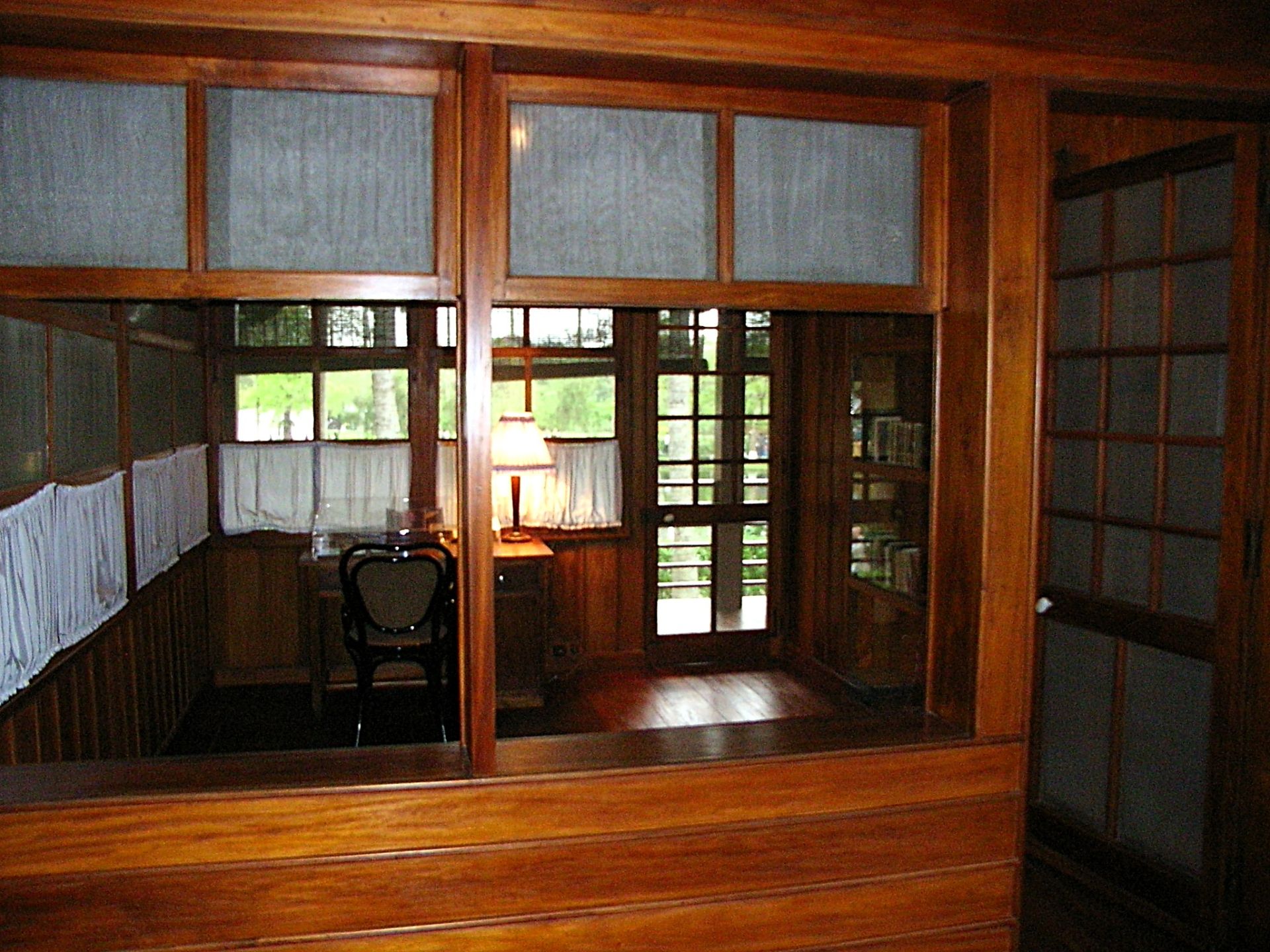 Visitors are not allowed into the house but can look through the window. The second room is the kitchen, and the third room is his simple bedroom with a plain bed with mosquito net. Also to be seen is a round table which was a gift of Cuba’s Leader Fidel Castro, on which laid a Khuat Nguyen Poet Statue. The house is integrated into the lakeside environment which Ho Chi Minh used constantly. He walked around it for exercise and fed the fish every morning. 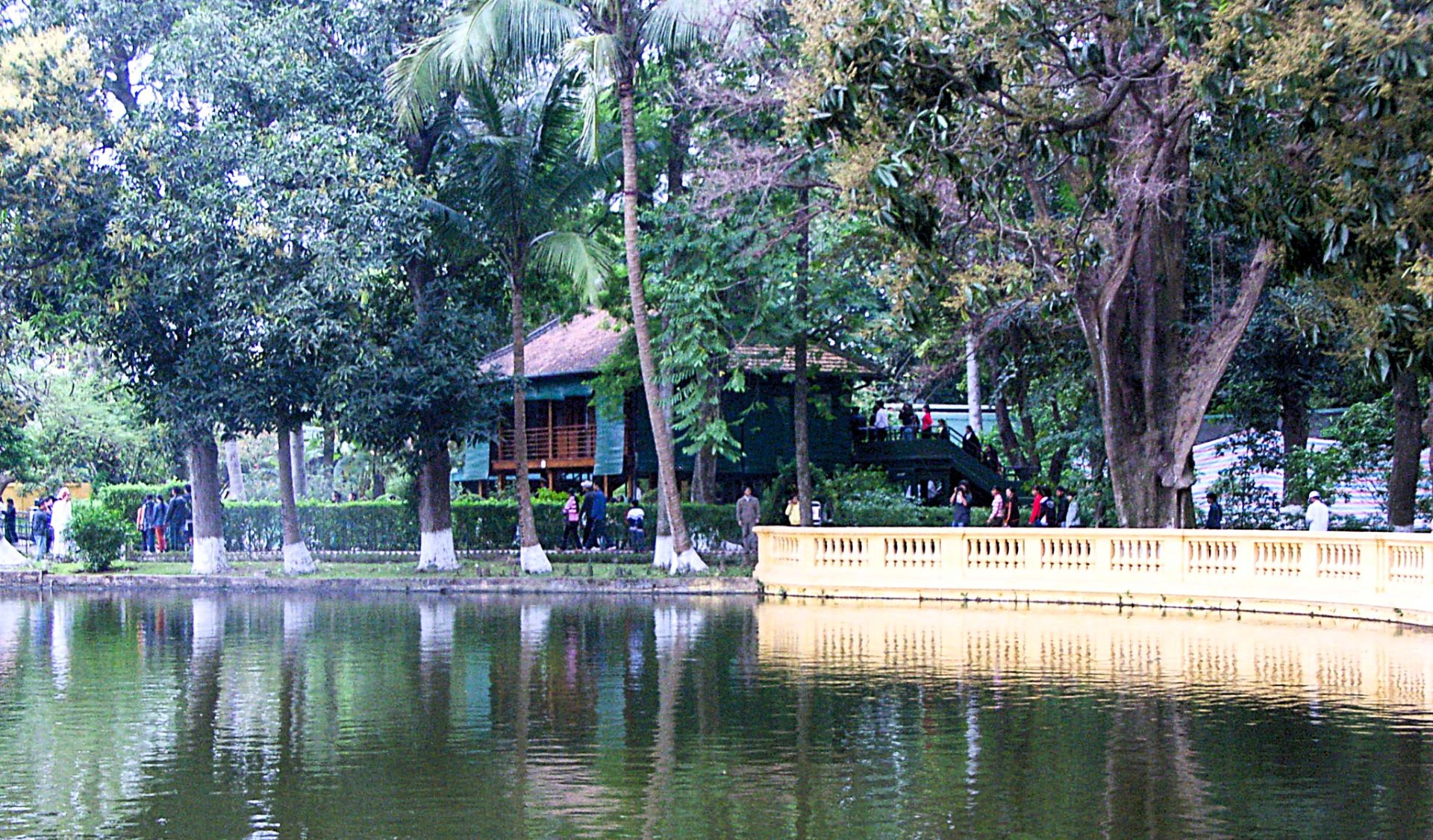 In 1958 he moved out of this house and into the Stilt House across the lake.
|
 |
|
 |
|||


All Photographs were taken by and are copyright of Ron Gatepain


| Site Map |