






 |
|
|||||||||||||||
 |
||||||||||||||||











 |
|||
 |
Mumbai Gateway of India – History, Architecture & Significance 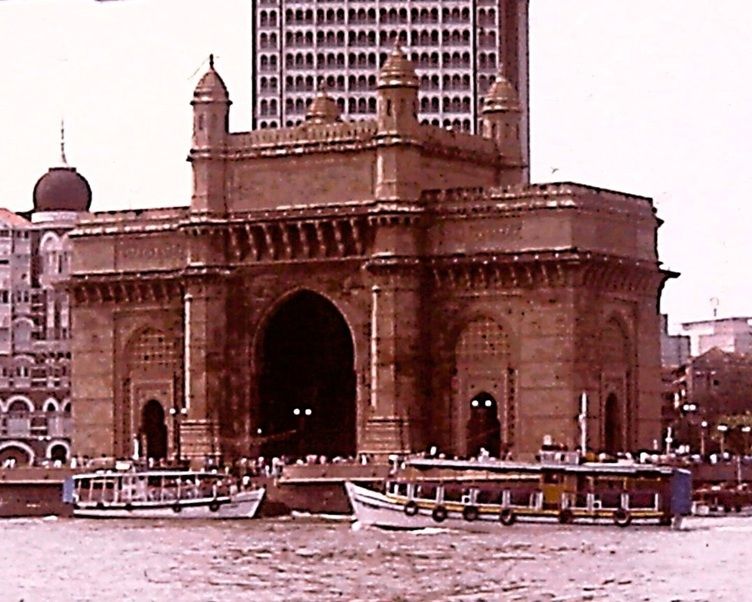
The Gateway of India stands on the waterfront at Apollo Bunder, Mumbai as one of the most recognizable monuments in the country. More than a landmark, it is a ceremonial threshold - once a literal point of imperial arrival and departure, now a civic symbol of India’s identity, resilience, and cosmopolitan character. Prior to 1995, Mumbai was called Bombay, its name was changed to remove colonial associations and reflect the local Marathi name, which is derived from the goddess Mumbadevi. This change was part of a broader movement in India to rename places to better align with local languages and cultural identities The Gateway of India is a 26‑metre (85‑foot) high basalt triumphal arch, built in the Indo‑Saracenic style, an architectural hybrid that blends Islamic, Hindu, and European motifs. It was conceived as a ceremonial entrance to India for visiting dignitaries arriving by sea. The monument stands at Apollo Bunder (Wellington Pier) on the Mumbai Harbour waterfront, directly facing the Arabian Sea. It forms a dramatic urban ensemble with the Taj Mahal Palace Hotel, creating one of the most photographed vistas in India. The British government commissioned the Gateway to commemorate the 1911 visit of King George V and Queen Mary, the first time a reigning British monarch visited India. Although the royal couple arrived before construction began, the monument became a symbolic statement of imperial authority and ceremonial grandeur. Designed by George Wittet, a Scottish architect who became one of the most influential designers in colonial Bombay, he was commissioned by Sir George Sydenham Clarke (Governor of Bombay) who approved the design. The Gateway is an excellent example of Indo‑Saracenic architecture, a style that emerged in the late 19th century as the British attempted to fuse local Indian traditions with European monumental forms. Constructed in a Triumphal Arch Form, which was inspired by Roman and European ceremonial arches. It was designed to be approached from the sea. It has a central dome with a diameter of 50 feet (15 metres) containing delicate latticework. It has four turrets which frame the structure, each with intricate detailing. With Islamic horseshoe arches, the whole structure contains Hindu and Islamic Motifs and Hindu floral and geometric patterns and stone screens. The Foundation stone was laid on 31 March 1913 with its construction being completed in 1924. The monument was opened to the public on December 4, 1924, by the viceroy of India, Rufus Isaacs, the earl of Reading. As the site was reclaimed land, the construction process required the foundations to be extensively steel reinforced. Constructed using yellow basalt and reinforced concrete, with stone sourced locally from quarries in the region. Skilled Indian craftsmen were engaged to complete the intricate stone carving, jaali work, and decorative elements. The original purpose was to serve as the ceremonial entrance for British governors, viceroys, and visiting dignitaries and to visually assert the British Empire’s presence in India. It was to communicate: Imperial authority (through scale and triumphal form); Cultural assimilation (through hybrid motifs) and Ceremonial arrival (through its axial alignment with the harbour). It was to become the city’s most recognizable landmark and a symbolic threshold between India and the wider world. In February 1948, the last British troops departed India through this arch, transforming it from a symbol of imperial arrival to one of national departure and independence. Today the Gateway of India remains deeply significant for both Cultural and Civic Role. It is a symbol of Mumbai’s identity commemorating India’s transition from colonial rule to independence. It also acts as a reminder of Mumbai’s maritime heritage and is a civic emblem of openness and resilience becoming a major tourist attraction and gathering place for such public events, such as the annual Hanukkah menorah lightings by Mumbai’s Jewish community. It also acts as the departure point for ferries to Elephanta Island. |
 |
|
 |
|||


All Photographs were taken by and are copyright of Ron Gatepain


| Site Map |