





 |
|
|||||||||||||||
 |
||||||||||||||||






 |
|||
 |
Tromsø Church of Our Lady – History, Architecture & Significance 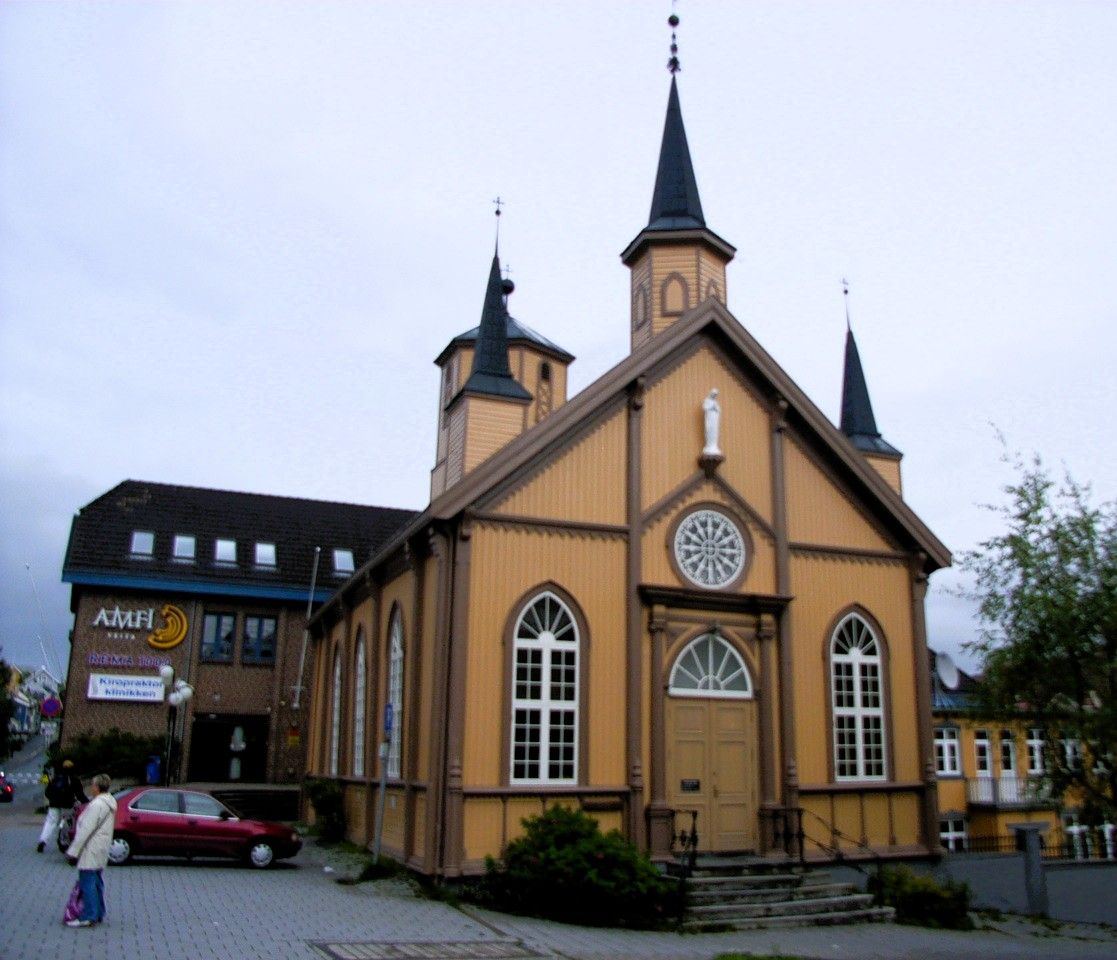
Situated almost 400 km above the Arctic circle, the Church of Our Lady (Vår Frue domkirke) stands in the heart of Tromsø, on Storgata 94, close to the city’s main square, Stortorget. It forms part of a small Catholic complex that includes the bishop’s residence and a former Catholic school. Its position in the Arctic Circle makes it the northernmost Catholic cathedral in the world. The church was built in 1861, the same year as Tromso Cathedral. Its construction marked a moment of religious consolidation in a growing Arctic town that was becoming a regional centre for trade, culture, and missionary activity. The Catholic presence in Tromsø had been modest but persistent, and the new church served as a mission church for northern Norway and the seat of the Catholic prelature. It was also a spiritual home for a small but diverse Catholic community. It looks like a small church although officially it is a cathedral. The Catholic precinct consists of three‑building: The Cathedral – spiritual and liturgical centre; The Parochial House – educational and community centre, and The Bishop’s Residence – administrative and symbolic centre. The Parochial house beside the church is a former Catholic school turned parish community building, forming part of a small but significant Catholic enclave in central Tromsø. Its simple wooden architecture and long service to education, parish life, and administration make it an essential companion to the tiny but symbolically important Arctic cathedral. Located immediately beside the Church of Our Lady, the parochial house building forms a small courtyard between it and the bishop’s residence. An Empire‑style building from 1832, it functioned as the Catholic school until 1967 when it became the parish’s administrative and community hub. Today it is used for Catechism classes, Parish meetings, social gatherings, administrative work and for Hospitality for visiting clergy. Pope John Paul II stayed there during his 1989 visit. The church building is a small wooden neo‑Gothic church, built using traditional timber construction with horizontal wooden cladding and cogging‑joint carpentry, a method well suited to Norway’s climate. The church is oriented with the choir facing north and the entrance facing south toward the town square, which is a reversal of the traditional east‑west Christian alignment. This reflects Tromsø’s urban layout more than liturgical convention. Its Ochre exterior with brown trim, gives the building a warm, traditional appearance and its compact footprint blends mission‑church simplicity. It has a Clay‑tile roof, unusual but durable for the region. The main façade has a statue of the Virgin Mary high above the door and three small towers with a small steeple‑crowned turret above the entrance. It also has two ridge turrets and a larger octagonal turret above the choir. Along the nave are sharp‑arched windows. These elements combine to create a modest but distinctive Arctic interpretation of 19th‑century Gothic revival architecture. The interior has a single nave with a simple wooden ceiling and wooden pews arranged in a straightforward layout with seating for about 150 people. Minimalist, with little ornamentation it is bright, painted in light colours having been modified several times, most significantly in the 1970s, when Bishop Gerhard Goebel directed a major simplification. A light‑painted chancel area and a simple altar has a statue on either side. 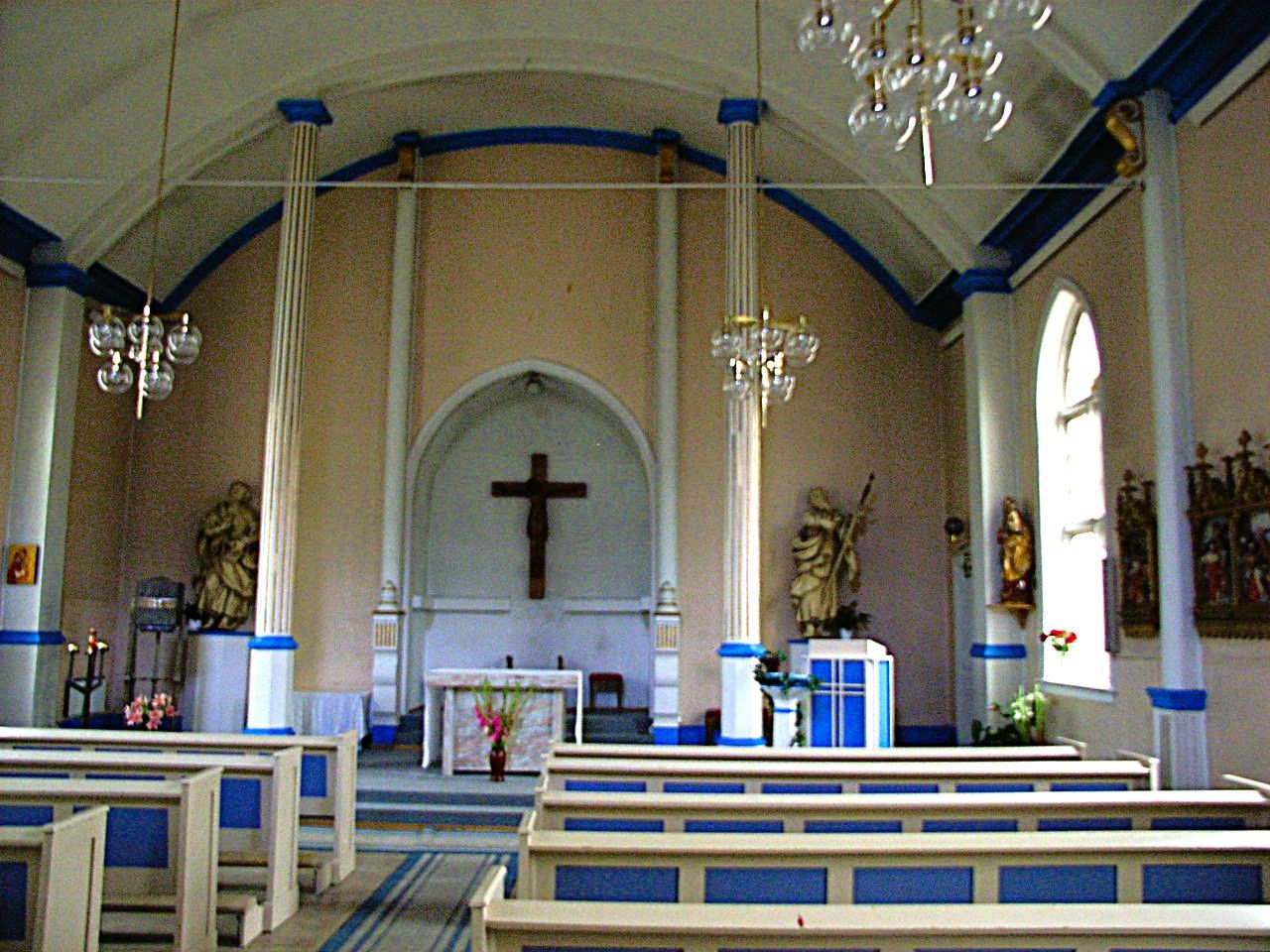 The one on the left is Saint Peter who is depicted with two keys symbolizing the “keys of the Kingdom of Heaven”, he is also holding a book or scroll - representing his apostolic teaching. 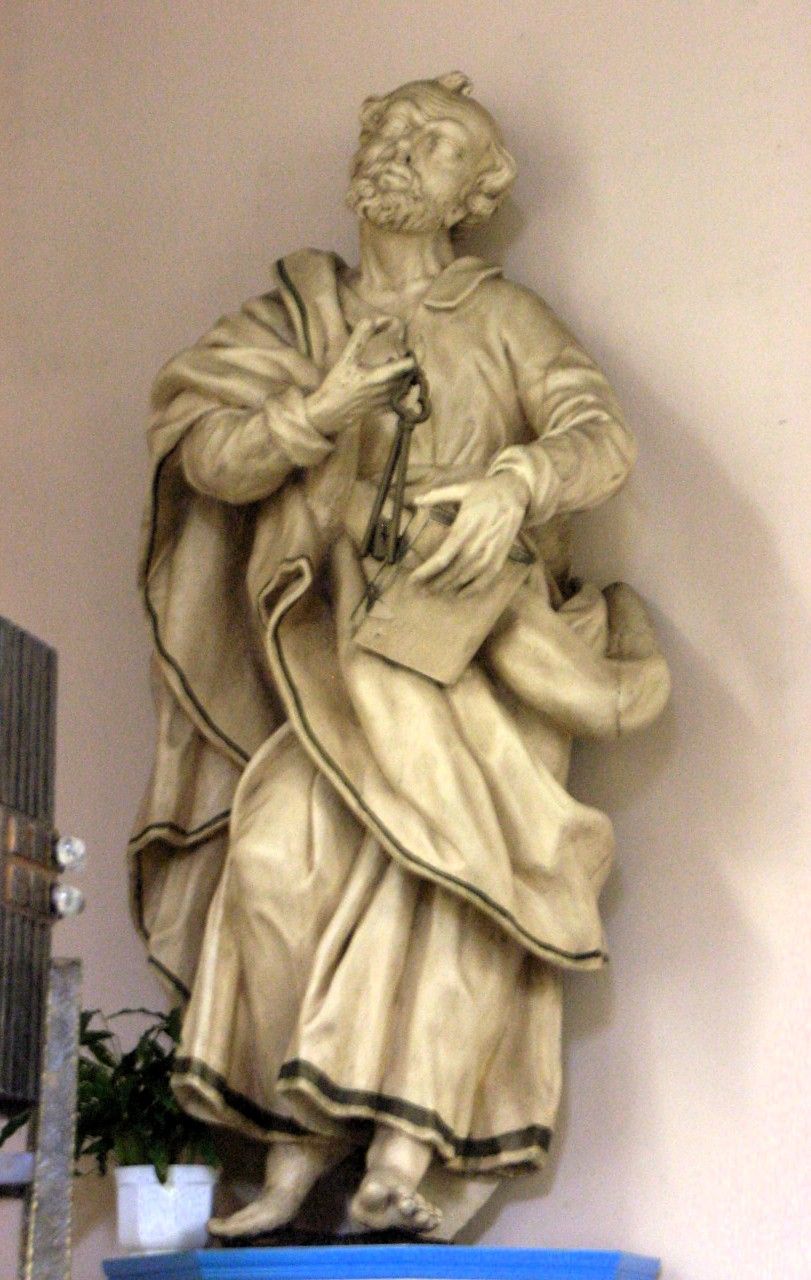 The one on the right is Saint Paul, shown with a single long sword which represents the “Sword of the Spirit” (his writings) and also his martyrdom by beheading. He is also holding a book. 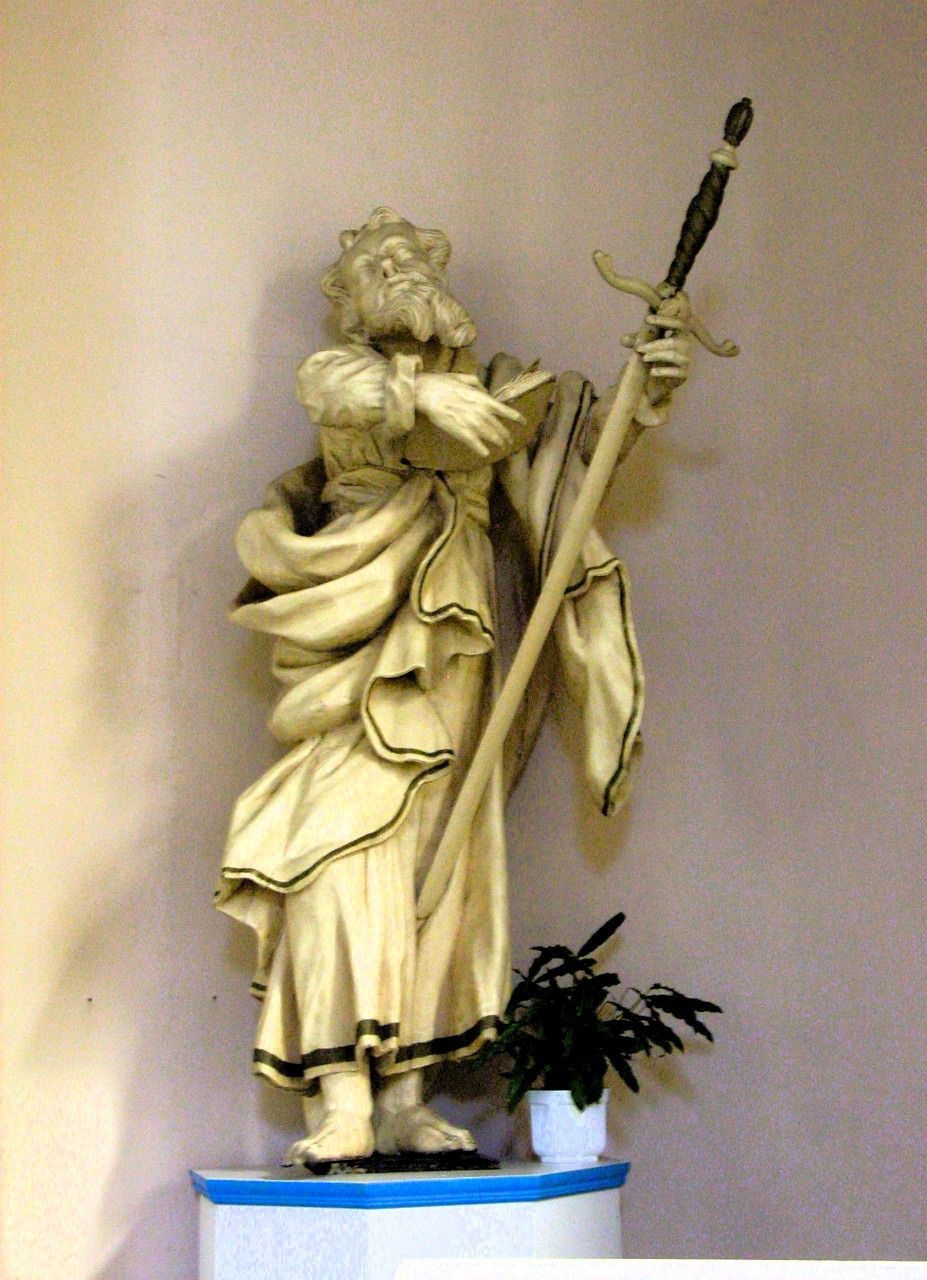 On the far right is a statue of the Virgin Mary. While along the side of the nave are the Stations of the Cross 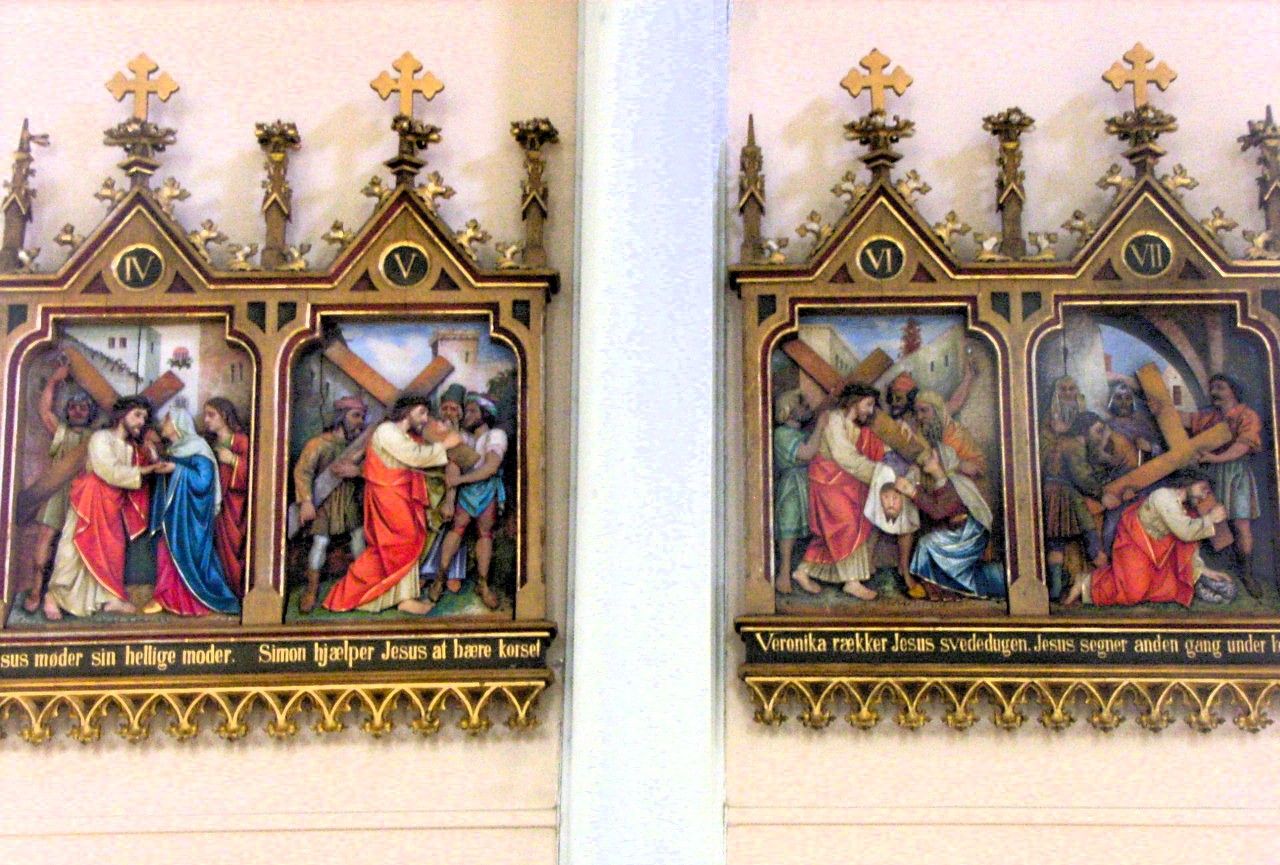 |
 |
|
 |
|||


All Photographs were taken by and are copyright of Ron Gatepain


| Site Map |