








 |
|
|||||||||||||||
 |
||||||||||||||||











 |
|||
 |
Xi'an Ci'en Temple & Great Wild Goose Pagoda – History, Architecture & Significance
The Ci’en Temple is situated to the south of the centre of Xi’an, and contains the Great Wild Goose Pagoda, one of the oldest Pagodas in China dating back to the Sui (581-618) and Tang (618-906) Dynasties.
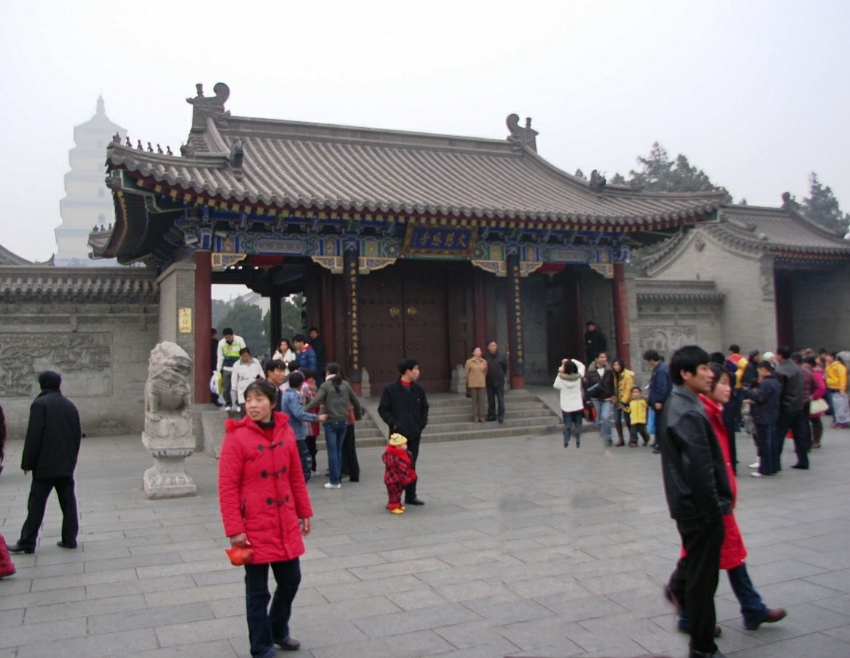
The Ci’en Temple was constructed between 581 and 618 and was originally known as the Non-Leak Temple. In 647 the temple was expanded to include 1,897 pavilions, halls and rooms by Prince LiZhi in memory of his mother and renamed to the Grand Mercy and Favour Temple. Shortly after its completion it became the centre for the translation of many Buddhist Sutras (Texts) by Xuanzang, one of China’s most famous monks. Xuanzang is known for his 16 years of travelling in India to collect Sutras and taking them back to China. In 652 the Great Wild Goose Pagoda was constructed to commemorate his return and to house the Sutras, statues and relics he had brought back. Many of the sutras and statues brought by Xuanzang can be seen in the buildings and within the Great Hall of the Buddha are statues showing three incarnations of Shakyamuni (The Buddha). Xuanzang planned to build the pagoda in stone but this had to be changed to one built of mud and brick due to the difficulty in obtaining stone and the cost that would have involved. Built with 5 storeys, this collapsed shortly after completion but was rebuilt between 701 – 704 with an additional 5 storeys. After its completion it became the custom for candidates who had passed the Imperial examination to become officials and climb to the top and inscribe their names. The temple was destroyed during the conflict that led to the downfall of the Tang Dynasty and was rebuilt to its present form during the Ming Dynasty (1368-1644). The pagoda today is 210 feet (64 metres) high and consists of 7 storeys. This resulted following its destruction and subsequent rebuilding after an earthquake in 1556. Each storey is square in plan with its walls being battered (slanting inwards) to provide greater resistance to earthquakes. The Pagoda got its name due to the architectural style being based on the Wild Goose Pagoda in India but was called the Big (Great) Wild Goose Pagoda to distinguish it from a smaller temple with the same name. 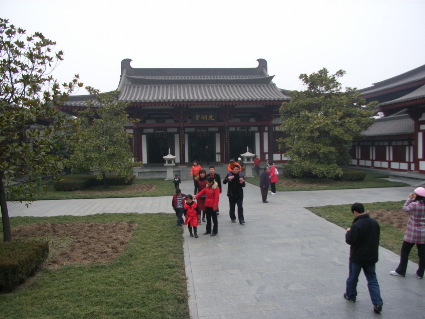 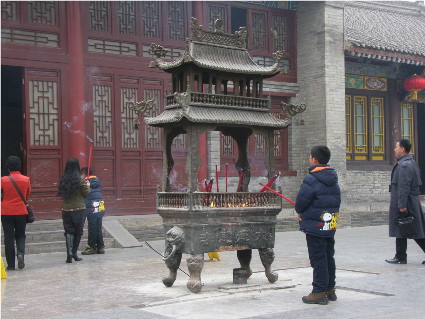 Incense Burner 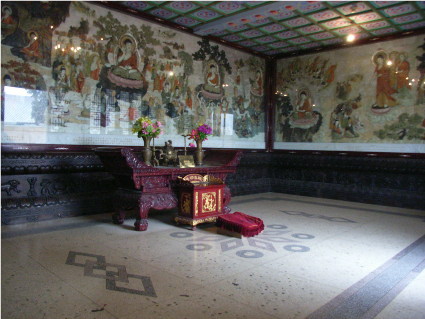 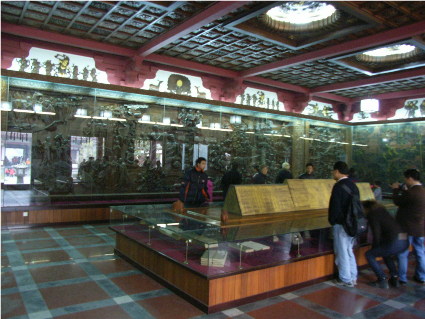 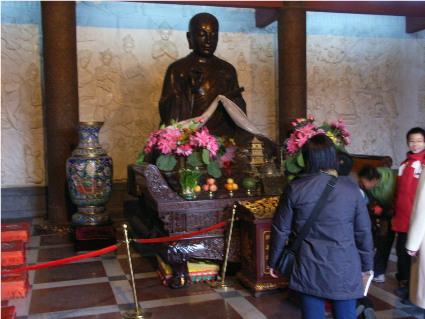 To see more photographs and take a virtual tour of the site click on the photoshow below.
|
 |
|
 |
|||


All Photographs were taken by and are copyright of Ron Gatepain


| Site Map |