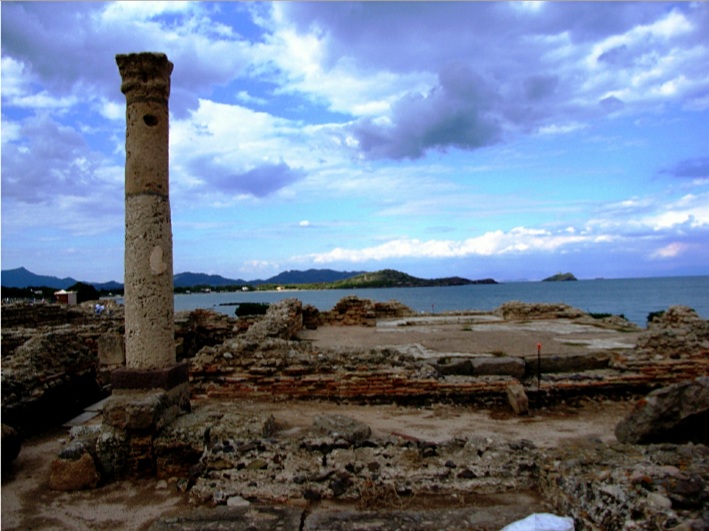
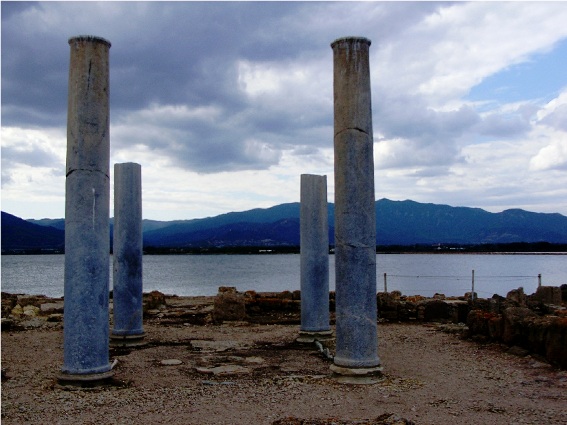
Nora, on a peninsula near Pula in southern Sardinia, is one of the island’s oldest urban settlements. First occupied by indigenous Sardinians, then developed into Sardinia’s earliest Phoenician city in the 8th century BCE. It flourished as a Punic trading hub with two harbours before becoming a Roman municipium in the 1st century CE, reaching its peak with roughly eight thousand inhabitants and serving as the starting point of the island’s road network. Famous for the Nora Stone—the earliest written reference to Sardinia, dated to the 9th–8th century BC—the site today preserves temples, baths, streets, a theatre, and partially submerged quarters caused by coastal subsidence. Its setting on the isthmus of Capo Pula, where ancient ruins meet the sea, makes it one of Sardinia’s most evocative archaeological landscapes.
Located on a peninsular near Pula and Cagliari, the capital of the island of Sardinia, Nora was established, according to legend, by the mythological hero Norax the son of Hermes the messenger of the gods. It is believed to be the first town founded in Sardinia when it was settled by the ancient Sherden, a sea people who habited the Mediterranean region in the second millennium BC and the Nuraghic people. Later it was colonization by the Phoenicians and then dominated by Carthage (Punic times) until it came under Roman control: In 238 BC it was chosen as the capital of the Roman province of Sardinia.
Throughout its’ history Nora was an important trading town due its three natural protected harbours, which could be used according to the conditions of the wind and sea. It became a major port, also due to its location, in the middle of the routes connecting the major ports of the Mediterranean. The city prospered for about 1500 years, becoming one of the most important cities on the south coast of Sardinia. It went into decline from the 4th century AD and was abandoned during the 7th or 8th century due to the continued incursions of pirates from North Africa and the Vandals.
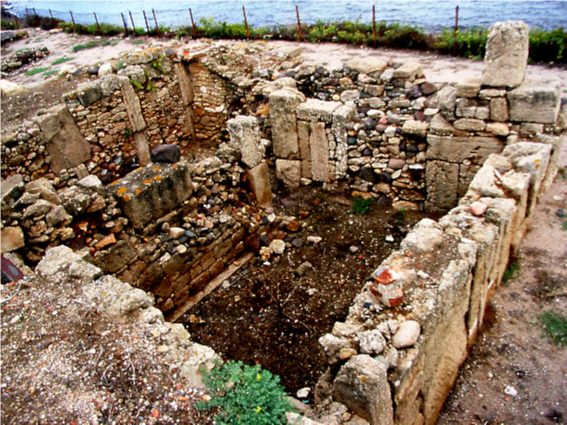
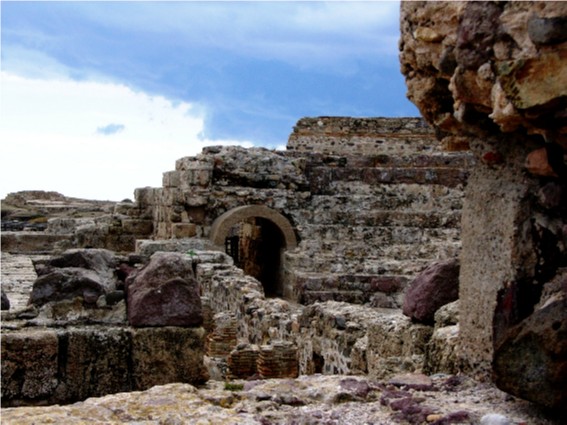
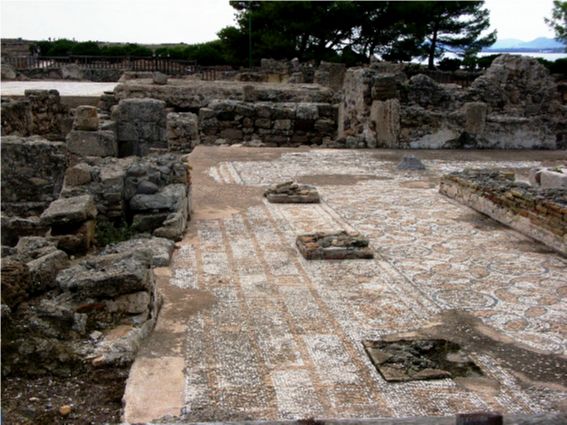
A significant part of the town of Nora has still to be excavated as some is on land belonging to the Italian military while other parts are now submerged under the sea. The parts of the town that have been excavated are an open-air museum. This includes the remains of four thermal baths (with some beautiful mosaics); a theatre (occasionally used during the summer for concerts) which dates back to the 2nd century AD and still exhibits large amphora used to create sound effects; also excavated is an amphitheatre as well as small houses and villas.
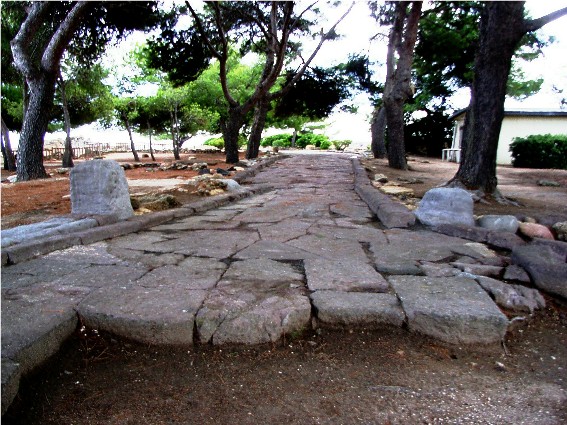
Recently the forum, or agora, has been uncovered. The remains of both Punic and Roman fortifications are still evident and the excavated buildings contain the remains from Punic houses and shrines, the temple dedicated to the goddess Tanit and a partially preserved necropolis. Remains from the Roman period include houses, including one with an atrium with a beautiful mosaic. It also contains well preserved paved streets and the systems for the delivery of water and the removal of waste water.
To see more photographs and take a virtual tour of the site click on the video below.